Sunday, July 15, 2018

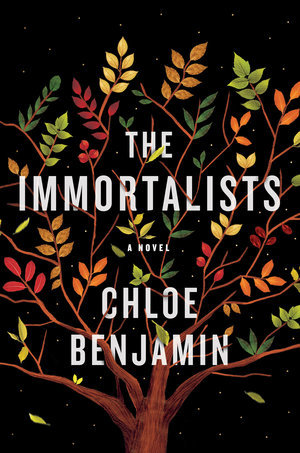
The Immortalists

The Immortalists
by Chloe Benjamin
Pub Jan 2018

 How would your life change if you knew what day you'd die? Four siblings bored of summertime visit a Romani mystic and leave with information that will change all of their lives. The story unfolds like a modern day Greek tragedy - bursting with a weird sort of self-propelled cosmic irony. So even though there was plenty about this book that I did like, it was basically everything happening between the plot lines. The bulk of the story kept me pretty bewildered. First off, going against all human instinct, none of the characters even try to rebel against the prophecies that they say they don't believe in. I'd understand this for a few of them to throw expectations to the wind but all four just full blast steer into the skid. Of course it's cliche to reject fate, but that's only because it's so painfully human to do so. On top of that, none of the characters --main or side-- were very likeable (barring Robert the dancer, he was great). Even the most rational ones of the bunch just dove headfirst into some nonsensical situations making it harder and harder to suspend disbelief as things unraveled.

 Now, what I did like. Each character had well-crafted, unique interpretations of the idea that "thoughts have wings" that there is power in "mind over matter." So much about our perception of reality not accessible to our conscious mind and this was explored beautifully. From her discussions of the placebo effect in medicine to physical and psychological forcing of a magicians illusions, this was where Benjamin's reflections on mortality and free will really shone through.

Friday, July 13, 2018

Sons of Cain

Sons of Cain: A History of Serial Killers from the Stone Age to the Present
by Peter Vronsky
To be Published: Aug 2018


“Justice withers, prison corrupts, and society gets the criminal it deserves.”
- Lacassagne

Putting to rest the idea that serial killings were an epidemic of the 20th century, historian Peter Vronsky sets out to explore the ancient and not-so-ancient history of pattern murderers across (mostly Western) societies. What I found most interesting is the argument that these crimes hold a mirror to the society and cultural conflicts of their time.

Murder, necrophilia, or cannibalism may not have been seen as ethical dilemmas until primitive homo sapiens began to develop a fear or reverence of death. But once cultural taboos were in place, the fantasy and delusions of serial murderers manifest as a reflection of their time. For instance in Medieval Europe, these types of murders were often attributed to supernatural causes such as werewolves, vampires or demonic possession. The pathologically cruel were welcomed into the folds of Inquisitions and witch hunts. Then, the Industrial Age and destabilization of the rural workforce incited an slew of murders targeting servants and working girls etc. This book was a fascinating recap of Western History through the observed patterns of serial murder. From World Wars to Civil Rights Movements to technological advancements, each generational wave brings forth new varieties of and new explanations for these human monsters. But the song remains the same...

This book relies heavily on historical research and mountains of statistics. While definitely a strength, it should still be consumed critically. Vronsky is typically forthright in identifying sources and defining variables, but there are times I found myself paging through the References and left feeling a bit misled by the phrasing of his interpretation. This doesn't detract from the entertainment of the book overall, but I'd be cautious before citing any hypotheses as fact. That said, he does a fantastic job of name-dropping other books on the subject giving the reader plenty of opportunity to read up on it themselves!

// I received this book free from NetGalley in exchange for an honest review.
Check out the author's website to order or get more info

Thursday, June 21, 2018

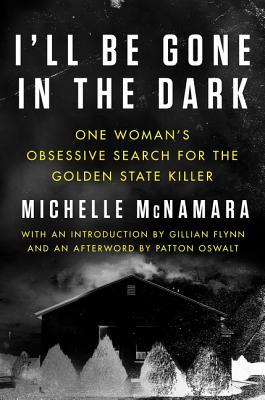
I'll Be Gone in the Dark

I'll Be Gone in the Dark
by Michelle McNamara
Pub Feb 2018

Short version: A riveting read. Truly compelling (& horrifying) write up on the history of the Golden State Killer's crimes and investigation. But I have lots of mixed feelings anyway.

Long Version: On the one hand, I relate to the author's spiral into obsession with serial murder mysteries. In fact, I recently came across my middle-to-high school diary and a good chunk of it was devoted to cracking the Zodiac Killer's cryptograms. (Though I can't say my motivations were very noble, I was just fascinated with catching a glimpse into the deepest darkest crevasses of humanity. Plus I fucking loved ciphers). After undergrad, I even considered applying to graduate programs focused on psychopathology research. So from that angle, I was completely hooked on this text. It's clearly a thorough, thoughtful account meant to shine a light one of the most heinous criminals in recent US history.

 Yet somehow despite all of that, the book still left me a bit unsettled. First of all, I wasn't expecting this to be part memoir. When she started going on about her own life and childhood I was genuinely worried she was going to weave herself into the entirety of the book, but thankfully it was just to give some background or establish context here and there. Beyond that, I'm generally suspicious of media riding this new "true crime" wave. It just feels... exploitative. McNamara sort of addresses this early on saying, “...I’ve always been aware of the fact that, as a reader, I am actively choosing to be a consumer of someone else’s tragedy. So like any responsible consumer, I try to be careful in the choices I make. I read only the best: writers who are dogged, insightful, and humane.”

 But even with her sensitive portrayal of the victims, the book still feels like it exists purely as a vehicle to showcase her writing. That or she wanted tangible justification for how much of her life she let this investigation consume. She did good work and she kept the case fresh in people's minds: I think the point of this book was to continue to keep the narrative alive, reaching as large an audience as possible in an effort to track down more clues. But man, sometimes her "insight" was so amateur I'd literally cringe.

 Now this could totally be the bias of hindsight, but it honestly doesn't seem like anything she contributed-- her hours and hours of combing through files and interviewing detectives and compiling insane amounts of data-- actually did anything to progress the investigation. The lead investigator was on the right track all on his own, it was just a matter of time.

Saturday, June 16, 2018

The Idiot
by Elif Batuman
Published: March 2017

If you have the chance to read this while laying on a towel in your backyard — or whatever lets you relive your favorite adolescent summer breaks — I highly recommend it. Nothing throws me back into past versions of myself like a well-written bildungsroman with an endearingly naive but resilient protag. 
College freshman Selin is learning to navigate elite university life in the 90's. She’s overanalyzing art and film, deconstructing theories of psycholinguistics and making friends with every fun ivy league stereotype along the way.

I get why this got nominated for a Pulitzer, Batuman has a thoughtful, observant way of capturing the world that was pleasantly refreshing. So maybe there are bits that got a little slow or parts where you just wanna shake the main character (until you remember what it was like to be 19 and allow some empathy... for her and for your own past self). To keep this spoiler free, I will just say that I found the ending to be very upsetting until I had a good think about how the main character would have felt about it. And then I had a good laugh. Well played.

Thursday, June 14, 2018

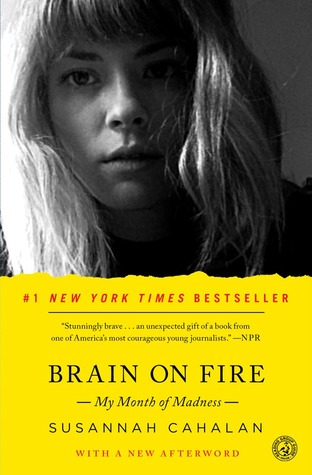
Brain on Fire

Brain on Fire: My Month of Madness
by Susanna Cahalan
Published: Aug 2013

With this memoir, Susanna Cahalan accomplishes the extremely intimate and humbling task of piecing together her firsthand experience with an inexplicable and disabling illness. She suffers from seizures, paranoid hallucinations, and alexia (an inability to read) but perhaps the most unsettling aspect is that even top neurologists were at a loss in determining the cause. Though the bulk of her time inpatient escapes her memory, she puts her New York Post reporting skills to work, examining hospital security video, interviewing doctors and nurses and family members (who knew The Post wrote about more than nonsense celebrity gossip?). She does an excellent job of introducing and explaining medical and psychological terminology throughout the text making it an excellent candidate for required reading.

As someone who administers neuropsychological assessments for research studies, it was really interesting to get the patient's perspective on cognitive testing. She captures the frustration and the effort it takes to trudge through the mental fogginess incredibly (is it a spoiler to reveal her diagnosis? Here it is anyway, for the curious: Anti-NMDA-receptor autoimmune encephalitis.). The whole experience was also a piercing glance into the american healthcare system, and research-based western medicine as a whole: the terrifying reality that no matter how far we've come in understanding the human body, there is still so much we have yet to learn.

The whole narrative is reminiscent of Jill Bolte Taylor's Stroke of Insight - a memoir written by a neuroanatomist who experiences a stroke. But I personally enjoyed Cahalan's write up SO MUCH MORE. Where Bolte Taylor uses the experience to confirm the existence of a higher power and feed her spirituality, Cahalan reflects more on the existential chaos that is first-person experience, our chaotic construction of reality via perception and the fallibility of memory. Now that's my jam.


SaveSave