Freak Kingdom: Hunter S. Thompson's Manic Ten-Year Crusade Against American Fascism
by Timothy Denevi
Expected Pub: Oct 2018
Freak Kingdom chronicles a decade in the life of Hunter S. Thompson amidst one of the more tumultuous and tense periods of American history. For how often HST found himself in the middle of cross-country era-defining adventures, he may as well be the political speed freak version of Forrest Gump (and I would so watch that movie). Partying with the counterculture Hells Angels and Merry Pranksters, calling out police violence in Chicago, running for Sheriff in Aspen, covering the Chicano Rights movement in LA, and even finding himself at the Watergate hotel bar the night of the infamous break-in.
As someone who used to read Fear and Loathing in Las Vegas every summer break in college, I'm definitely an easy target for this action-packed biography. Still, Denevi's portrayal of HST is well-researched, honest and pulls no punches. I think the spirit of the text is best captured by the book's blurb:
"Hunter S. Thompson is often misremembered as a wise-cracking, drug-addled cartoon character. This book reclaims him for what he truly was: a fearless opponent of corruption and fascism, one who sacrificed his future well-being to fight against it, rewriting the rules of journalism and political satire in the process."
I was genuinely sad when it was over, I want to watch the rest of history play out through lens of this sardonic madman.
// I received this book free from NetGalley in exchange for an honest review.
Publisher: Public Affairs -- but you can also pre-order through IndieBound or my friendly neighborhood indie Brazos Bookstore
Showing posts with label nonfiction. Show all posts
Friday, August 10, 2018
Friday, July 13, 2018
Sons of Cain
Sons of Cain: A History of Serial Killers from the Stone Age to the Present
by Peter Vronsky
To be Published: Aug 2018
“Justice withers, prison corrupts, and society gets the criminal it deserves.”
Putting to rest the idea that serial killings were an epidemic of the 20th century, historian Peter Vronsky sets out to explore the ancient and not-so-ancient history of pattern murderers across (mostly Western) societies. What I found most interesting is the argument that these crimes hold a mirror to the society and cultural conflicts of their time.
Murder, necrophilia, or cannibalism may not have been seen as ethical dilemmas until primitive homo sapiens began to develop a fear or reverence of death. But once cultural taboos were in place, the fantasy and delusions of serial murderers manifest as a reflection of their time. For instance in Medieval Europe, these types of murders were often attributed to supernatural causes such as werewolves, vampires or demonic possession. The pathologically cruel were welcomed into the folds of Inquisitions and witch hunts. Then, the Industrial Age and destabilization of the rural workforce incited an slew of murders targeting servants and working girls etc. This book was a fascinating recap of Western History through the observed patterns of serial murder. From World Wars to Civil Rights Movements to technological advancements, each generational wave brings forth new varieties of and new explanations for these human monsters. But the song remains the same...
This book relies heavily on historical research and mountains of statistics. While definitely a strength, it should still be consumed critically. Vronsky is typically forthright in identifying sources and defining variables, but there are times I found myself paging through the References and left feeling a bit misled by the phrasing of his interpretation. This doesn't detract from the entertainment of the book overall, but I'd be cautious before citing any hypotheses as fact. That said, he does a fantastic job of name-dropping other books on the subject giving the reader plenty of opportunity to read up on it themselves!
// I received this book free from NetGalley in exchange for an honest review.
Check out the author's website to order or get more info
by Peter Vronsky
To be Published: Aug 2018
“Justice withers, prison corrupts, and society gets the criminal it deserves.”
- Lacassagne
Putting to rest the idea that serial killings were an epidemic of the 20th century, historian Peter Vronsky sets out to explore the ancient and not-so-ancient history of pattern murderers across (mostly Western) societies. What I found most interesting is the argument that these crimes hold a mirror to the society and cultural conflicts of their time.
Murder, necrophilia, or cannibalism may not have been seen as ethical dilemmas until primitive homo sapiens began to develop a fear or reverence of death. But once cultural taboos were in place, the fantasy and delusions of serial murderers manifest as a reflection of their time. For instance in Medieval Europe, these types of murders were often attributed to supernatural causes such as werewolves, vampires or demonic possession. The pathologically cruel were welcomed into the folds of Inquisitions and witch hunts. Then, the Industrial Age and destabilization of the rural workforce incited an slew of murders targeting servants and working girls etc. This book was a fascinating recap of Western History through the observed patterns of serial murder. From World Wars to Civil Rights Movements to technological advancements, each generational wave brings forth new varieties of and new explanations for these human monsters. But the song remains the same...
This book relies heavily on historical research and mountains of statistics. While definitely a strength, it should still be consumed critically. Vronsky is typically forthright in identifying sources and defining variables, but there are times I found myself paging through the References and left feeling a bit misled by the phrasing of his interpretation. This doesn't detract from the entertainment of the book overall, but I'd be cautious before citing any hypotheses as fact. That said, he does a fantastic job of name-dropping other books on the subject giving the reader plenty of opportunity to read up on it themselves!
// I received this book free from NetGalley in exchange for an honest review.
Check out the author's website to order or get more info
Labels:
book review,
history,
netgalley,
nonfiction,
reading is fun,
serial killers
Thursday, June 21, 2018
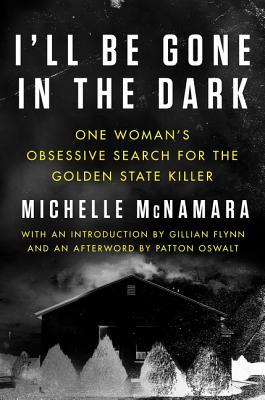
I'll Be Gone in the Dark
by Michelle McNamara
Pub Feb 2018
Short version: A riveting read. Truly compelling (& horrifying) write up on the history of the Golden State Killer's crimes and investigation. But I have lots of mixed feelings anyway.
Long Version: On the one hand, I relate to the author's spiral into obsession with serial murder mysteries. In fact, I recently came across my middle-to-high school diary and a good chunk of it was devoted to cracking the Zodiac Killer's cryptograms. (Though I can't say my motivations were very noble, I was just fascinated with catching a glimpse into the deepest darkest crevasses of humanity. Plus I fucking loved ciphers). After undergrad, I even considered applying to graduate programs focused on psychopathology research. So from that angle, I was completely hooked on this text. It's clearly a thorough, thoughtful account meant to shine a light one of the most heinous criminals in recent US history.
Yet somehow despite all of that, the book still left me a bit unsettled. First of all, I wasn't expecting this to be part memoir. When she started going on about her own life and childhood I was genuinely worried she was going to weave herself into the entirety of the book, but thankfully it was just to give some background or establish context here and there. Beyond that, I'm generally suspicious of media riding this new "true crime" wave. It just feels... exploitative. McNamara sort of addresses this early on saying, “...I’ve always been aware of the fact that, as a reader, I am actively choosing to be a consumer of someone else’s tragedy. So like any responsible consumer, I try to be careful in the choices I make. I read only the best: writers who are dogged, insightful, and humane.”
But even with her sensitive portrayal of the victims, the book still feels like it exists purely as a vehicle to showcase her writing. That or she wanted tangible justification for how much of her life she let this investigation consume. She did good work and she kept the case fresh in people's minds: I think the point of this book was to continue to keep the narrative alive, reaching as large an audience as possible in an effort to track down more clues. But man, sometimes her "insight" was so amateur I'd literally cringe.
Now this could totally be the bias of hindsight, but it honestly doesn't seem like anything she contributed-- her hours and hours of combing through files and interviewing detectives and compiling insane amounts of data-- actually did anything to progress the investigation. The lead investigator was on the right track all on his own, it was just a matter of time.
Thursday, June 14, 2018
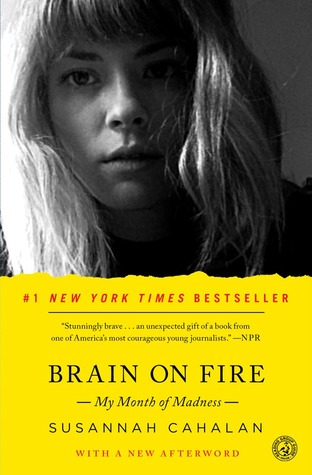
Brain on Fire
Brain on Fire: My Month of Madness
by Susanna Cahalan
Published: Aug 2013
With this memoir, Susanna Cahalan accomplishes the extremely intimate and humbling task of piecing together her firsthand experience with an inexplicable and disabling illness. She suffers from seizures, paranoid hallucinations, and alexia (an inability to read) but perhaps the most unsettling aspect is that even top neurologists were at a loss in determining the cause. Though the bulk of her time inpatient escapes her memory, she puts her New York Post reporting skills to work, examining hospital security video, interviewing doctors and nurses and family members (who knew The Post wrote about more than nonsense celebrity gossip?). She does an excellent job of introducing and explaining medical and psychological terminology throughout the text making it an excellent candidate for required reading.
As someone who administers neuropsychological assessments for research studies, it was really interesting to get the patient's perspective on cognitive testing. She captures the frustration and the effort it takes to trudge through the mental fogginess incredibly (is it a spoiler to reveal her diagnosis? Here it is anyway, for the curious: Anti-NMDA-receptor autoimmune encephalitis.). The whole experience was also a piercing glance into the american healthcare system, and research-based western medicine as a whole: the terrifying reality that no matter how far we've come in understanding the human body, there is still so much we have yet to learn.
The whole narrative is reminiscent of Jill Bolte Taylor's Stroke of Insight - a memoir written by a neuroanatomist who experiences a stroke. But I personally enjoyed Cahalan's write up SO MUCH MORE. Where Bolte Taylor uses the experience to confirm the existence of a higher power and feed her spirituality, Cahalan reflects more on the existential chaos that is first-person experience, our chaotic construction of reality via perception and the fallibility of memory. Now that's my jam.
SaveSave
Labels:
book review,
female writer,
memoir,
memory,
nonfiction,
reading is fun
Wednesday, February 14, 2018
Feel Free by Zadie Smith
Feel Free is a phenomenal round up of Zadie Smith's articles and essays over the last ten or so years. Not all of the pieces were for me personally (specifically the heavy dose of highbrow lit crit), but man, the rest really struck me down to my core. So whether you identify as a writer, reader, artist, musician, historian philosopher, millennial, gen-Xer, black, white, or mixed: there's something that will speak to you, trust me. Together the essays weave a rich tapestry of voices, all varying shades of Smith. Deeply personal experiences presented alongside stoic, critical analyses. She waxes poetic on the importance of libraries, how technology shifts reality, pluralism and the significance of race, why she was terrified of writing in the first person and oh yeah this one time she burned down her Italian apartment. Seriously, something for everyone."I find myself to be radically discontinuous with myself."
I didn't collect all of these links to stick it to the publishing industry or help people bypass checking out the book for themselves. Just thought it'd be nice to compile the works into one easy-to-access spot for anyone else wanting to reference the texts digitally. Our benevolent overlords at Google Books have a ctrl+f-able preview available but it's not really the same.
PART I: IN THE WORLD
Northwest London Blues
Elegy for a Country's Seasons
Fences: A Brexit Diary
On Optimism and Despair
PART II: IN THE AUDIENCE
Generation Why?
The House that Hova Built
Brother from Another Mother
Some Notes on Attunement
Windows on the Will: Anomalisa
Dance Lessons for Writers
PART III: IN THE GALLERY
Killing Orson Welles at Midnight
Crazy They Call me
A Bird of Few Words: Narrative Mysteries in the Paintings of Lynette-Yiadom Boakye
Getting in and Getting Out
MIA: Flaming June, Alte Frau by Balthasar Denner, Mark Bradford's Niagra, The Tattered Ruins of the Map: On Sarah Sze's Centrifuge
Crash by JG Ballard
The Buddha of Suburbia by Hanif Kureishi
Notes on NW
The Harper's Columns
The I Who is not Me (couldn't find the transcript, but this is an article about it)
PART V: FEEL FREE
Life-Writing
The Bathroom & Meet Justin Bieber! (couldn't find the transcript, but this is an article about it)
Man Versus Corpse
Love in the Gardens
Find your Beach
Joy
MIA: The Shadow of Ideas
And while I was scouring the web for EVERYTHING ZADIE I came across two beautiful commencement addresses that I may as well throw into this heap of links:
2014 New School Commencement Address
2016 Grinnell College Commencement Address
Happy Reading!
If you've found any of the ones I'm missing are easily accessible and I'm just dumb, drop me a comment and I'll add it in!
// and now a guide to my header collage//
i.e. in which essays you will find reference to these lovely people/charactersAlso is it just me or do Phillip Roth and Denner's Alte Frau look like they're related?
Joni Mitchell > Notes on Attunement
Scowling Old Woman > Alte Frau by Balthasar Denner
Billie Holiday > Crazy They Call Me
Michael Jackson, Prince, Beyonce > Dance Lessons for Writers
Jesse Eisenberg in The Social Network > Generation Why?
Harold Lloyd hanging off a clock in Safety Last! > Killing Orson Welles at Midnight
Key & Peele > Brother from Another Mother
Man with bird, painting titled Mercy over Matter > A Bird of Few Words
Girl lounging in an orange dress > Flaming June
Jay-Z > The House that Hova Built
Zadie Smith looking gorgeous > All of em!
Phillip Roth > The I Who Isn't Me
Daniel Kaluuya in Get Out > Getting In and Out
Feel Free: Essays
by Zadie Smith
Published: February 2018
Monday, January 15, 2018
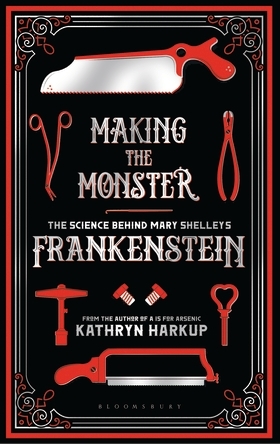
Making the Monster, or Happy 200th Birthday Frankenstein!
Making the Monster: The Science Behind Mary Shelley's Frankenstein
by: Kathryn Harkup
To be Published: Feb 2018
2018 marks the 200th anniversary of Mary Shelley's gothic masterpiece-- Frankenstein; or The Modern Prometheus. Widely recognized as one of the first (if not the first) work of science fiction, this revolutionary novel has truly withstood the test of time (and continues to haunt middle school literary criticism to this day). Some may already know the broad strokes of how this story came to life: on a dark and stormy night (of course), 18 year old Mary joins her friends in a competitive game to see who can write the best horror story. Inspired by the rational ideals of the Enlightenment and recent advances in electricity research, Mary writes the short story that she will later develop into the novel we know and love.
Making the Monster dives quite bit deeper into the historical context of this work, piecing together not only Mary's biography but those of her family, friends and any intellectual or "natural philosopher" she may have been influenced by. This is interwoven with the upheavals in politics and the sciences leading up to her education and journey away from home. Though the narrative unravels into countless tangents and side-histories, it is well-organized and cohesive. This is a book for anyone who enjoys reading about the history of scientific progress-- the controversies, the blunders, and the experiments that got us where we are today1. Whether or not you enjoyed (or even read) Frankenstein, if you appreciate its significance in history and are ready to fall down the rabbit-hole of alchemy, galvanism, and medical experimentation (oh my!), check it out.
// I received this book free from NetGalley in exchange for an honest review.
1. If weird medical history is your thing and you're not already listening to the Maximum Fun podcast "Sawbones" Run, don't walk.
by: Kathryn Harkup
To be Published: Feb 2018
2018 marks the 200th anniversary of Mary Shelley's gothic masterpiece-- Frankenstein; or The Modern Prometheus. Widely recognized as one of the first (if not the first) work of science fiction, this revolutionary novel has truly withstood the test of time (and continues to haunt middle school literary criticism to this day). Some may already know the broad strokes of how this story came to life: on a dark and stormy night (of course), 18 year old Mary joins her friends in a competitive game to see who can write the best horror story. Inspired by the rational ideals of the Enlightenment and recent advances in electricity research, Mary writes the short story that she will later develop into the novel we know and love.
Making the Monster dives quite bit deeper into the historical context of this work, piecing together not only Mary's biography but those of her family, friends and any intellectual or "natural philosopher" she may have been influenced by. This is interwoven with the upheavals in politics and the sciences leading up to her education and journey away from home. Though the narrative unravels into countless tangents and side-histories, it is well-organized and cohesive. This is a book for anyone who enjoys reading about the history of scientific progress-- the controversies, the blunders, and the experiments that got us where we are today1. Whether or not you enjoyed (or even read) Frankenstein, if you appreciate its significance in history and are ready to fall down the rabbit-hole of alchemy, galvanism, and medical experimentation (oh my!), check it out.
// I received this book free from NetGalley in exchange for an honest review.
![]() |
| *blows dust off drawing pad* 2018 resolutions here we go! |
Labels:
ARC,
book review,
female writer,
history,
netgalley,
nonfiction,
reading is fun,
science,
science fiction
Friday, November 24, 2017
Making Sense of the Alt-Right
by George Hawley
Published: September 2017
Making Sense of the Alt-Right offers a quick primer on the relatively new extremist offshoot of American conservatism.
The Alternative Right's primary focus is aggressive, irreverent white-identitarian politics, but as it gains traction has also begun to capture a jumbled web of disgruntled conservatives seeking an outlet from the mainstream.
Hawley details the ideological foundations (racial realism, paleoconservatism, radical libretarianism) as well as the projections for the future of the movement in Trump's America. Because there is no centralized leader, the messages and strategies that "go viral" are the ones that are perpetuated, giving the movement a haphazard, disjointed quality.
4.5 out of 5 stars: Somehow despite being one of the biggest buzzwords of the 2016 election and following year, I didn't know much more about this trend than the fact that it existed and it's lifeblood was extremist hate speech. Turns out, news coverage of the group was only hyperbolic in insinuating the group was organized and cohesive (so don't worry, all of the horrible racist, misogynist, shocking language you've heard spewed really are quite accurate). Well-researched and very thorough read - I will definitely be checking out Hawley's other books in the hopes to shed some light on other factions within our political spectrum. Alt-left anyone?
// I received this book free from NetGalley in exchange for an honest review.
Labels:
ARC,
book review,
first race war huh,
netgalley,
nonfiction,
politics,
reading is fun
Tuesday, November 14, 2017
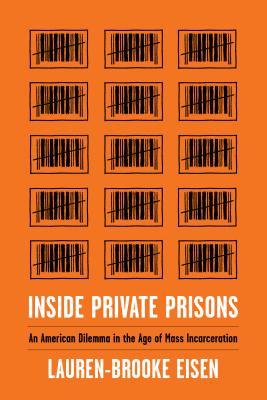
Inside Private Prisons
Inside Private Prisons: An American Dilemma in the Age of Mass Incarceration
by Lauren-Brooke Eisen
Published: November 2017
First and foremost, Inside Private Prisons is an investigation of the benefits and downsides of privatizing the American prison system. But of course, everything is more complicated than it seems. A journey through the history of privatization goes on to explore our sordid past (and present) of prisoners as commodities, how activists use prison divestment as a tool, and the extent to which immigrant detention centers fit into the prison industrial complex. Overarching the span of the book, readers are encouraged to reflect on the nature of the carceral state: how did we get to this age of mass incarceration? How will our current political landscape shape the future?
3.5 out of 5 stars: This book was well-researched almost to a fault - just bursting at the seams with information. The overarching structure of the book sets a solid foundation for discussion, but I felt within each chapter the narrative tends to diverge wildly, leaving some anecdotes and facts a bit scattered and out of place. On the one hand, I want to casually recommend this to anyone with zero background knowledge of the United States prison system (like me!) because it such a strong collection of data and eye-opening realities*. But if I'm completely honest it was a bit of a struggle for me to get through, probably better suited as a required reading text in a college course.
* Did you know small prison towns get to headcount prisoners in the census? So even though prisoners can't vote, they brings more political weight to the region AND bring down the mean income level qualifying the town for federal aid. What a fun new way to gerrymander over-representation for rural america!
// I received this book free from NetGalley in exchange for an honest review.
Labels:
ARC,
book review,
netgalley,
nonfiction,
politics,
reading is fun
Tuesday, October 10, 2017
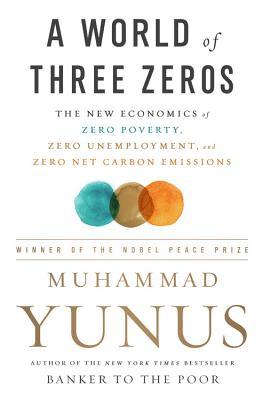
A World of Three Zeros
A World of Three Zeros: The New Economics of Zero Poverty, Zero Unemployment, and Zero Net Carbon Emissions
by Muhammad Yunus
Muhammad Yunus was actually the commencement speaker at my graduation ceremony and even though the whole day is a bit of an emotional blur, his speech (which I'm trying desperately to find somewhere online) stuck with me. It was the first I had ever heard of microfinance- his revolutionary movement creating entrepreneurial opportunities for the impoverished by offering small loans. In A World of Three Zeros, Yunus expands on his vision for the future - one in which economics is shaped by and reliant on social and environmental policies. He imagines a world with zero poverty, zero unemployment and zero net carbon emissions and this book expands on the framework that will help get us there.
One main focus is on the concept of a "social business": the idea that businesses can exist in a realm between nonprofit and for-profit. These businesses serve the community by satisfying a present need and funnel all profits back into the business itself, allowing for expansions and improvements rather than lining the pockets of investors or executives. Social businesses rely on the principle that humans have both selfish and altruistic impulses: the self-propelled nature of this model encourages the distribution of wealth by offering employment, goods and services, and community engagement without relying on donations or charity.
4.5 out of 5 stars: This was a very interesting book to read and catch up on what Muhammad Yunus has been up to, especially since I haven't thought much about microcredit in the last decade. Yunus' passion for this mission is tangible. Though there were times where the book felt a bit like an advertisement for Grameen Bank, I don't feel that it detracts from the message since (by definition) he doesn't personally stand to gain from a more widespread adoption of this model. All in all, this book can be summed up by the age-old adage: "give a man a fish and he is fed for a day; teach a man to fish, give him a small loan to start up his own small company where he is able to hire others to work with him to sell fish to the poor at a price they can afford and you help bring a community out of poverty. Or something like that.
// I received this book free from NetGalley in exchange for an honest review.
Labels:
ARC,
book review,
netgalley,
nonfiction,
reading is fun,
rice university
Friday, September 15, 2017
Brooklyn's Sweet Ruin
Brooklyn's Sweet Ruin: Relics and Stories of the Domino Sugar Refinery
by: Paul Raphaelson
To Be Published: Oct 2017
The Domino Sugar Refinery is an iconic figure of the Williamsburg skyline. At one point it was the world's largest sugar refinery, processing 4 million pounds of raw sugar a day. However production steadily decreased throughout later half of the 20th century and it eventually closed in 2004. Though it was granted historic landmark status in 2007, its fate has been in limbo since.
When I lived in Brooklyn I'd run by it daily, always wondering what was going on behind those shuttered doors. I mean, it stands on prime real estate in an area intent on gentrification, where posh waterfront studios just keep shooting up at an alarming rate. "Brooklyn's Sweet Ruin" gives a final glimpse into the heart of the Domino Sugar Refinery before its demolition. There is a certain sadness in seeing relics of an industrialized era, but in the nostalgia there is awe and wonder at what architecture and workforce are capable of.
4.5 out of 5 stars: The photos are absolutely gorgeous (with an undeniable "Fallout" vibe) but what I appreciated most was the accompanying write up: interviews with workers, a brief history of the refinery, and context for its place in history.
PS: Apparently this book started as project on Kickstarter, and you can find more information on this video posted by Paul Raphaelson and his website.
// I received this book free from NetGalley in exchange for an honest review.
![]() |
| From the Kickstarter page, view from the East River |
// I received this book free from NetGalley in exchange for an honest review.
Labels:
ARC,
book review,
brooklyn,
fallout,
netgalley,
nonfiction,
photography
Saturday, September 9, 2017
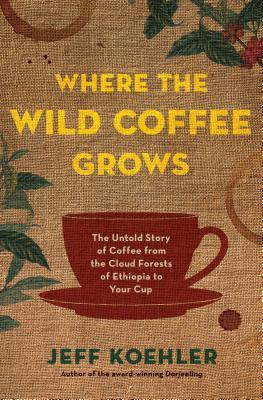
Where the Wild Coffee Grows
Where the Wild Coffee Grows: The Untold Story of Coffee from the Cloud Forests of Ethiopia to Your Cup
by: Jeff Koehler
To Be Published: Nov 2017
"Where the Wild Coffee Grows" takes us on a well-researched trek through the history of the coffee, bringing together the writings of explorers and historians as well as first hand accounts from living farmers, scientists, and magnates of the coffee industry. The journey begins in the forests of Ethiopia, where communities view the coffee preparation ritual as a social activity, an expression of their spiritual connection with nature. Then we follow the beans as they make their way into the Middle East and Europe through conquest and trade. We end in the modern era, riding the wave of mass-consumption and artisanal quality in a globalized market. Yet ominous clouds of issues billow ahead, threatening the natural existence of our favorite beverage: the steadily changing climate, the spread of fungal blights, and the unfortunate homogeneity of coffee-plant genetics leave the future uncertain.
4 out of 5 stars: As Colombian-American, coffee is quite literally my lifeblood. I felt like I owed it to my multi-cup-a-day habit to learn a bit more about this precious beverage, and I found the history of mankind's relationship with this bean to be fascinating. The first few chapters were a bit long-winded and overly detailed while excavating the history of Ethiopian politics, tangential to the story at hand. But once the text returned to the global impact of coffee and threats to its future, the book was hard to put down. The perspectives compiled for this work will appeal to coffee snobs and scientists alike, though honestly anyone with a taste for the black gold will enjoy reading up on its past, present and future.
// I received this book free from NetGalley in exchange for an honest review.
Labels:
ARC,
biology,
book review,
botany,
history,
netgalley,
nonfiction,
reading is fun
Thursday, August 31, 2017
The Curl Revolution
The Curl Revolution: Inspiring Stories and Practical Advice from the NaturallyCurly Community
by: Michelle Breyer
To be published: October 2017
Anyone with naturally curly or wavy hair knows how challenging it can be to tame. The goal of this book is to offer support and advice to women and men with textured locks. Michelle Breyer is the co-founder of NaturallyCurly.com which has been a resource of the curly-haired community for almost two decades.
First, we learn about the history and formation of the website and CurlTalk forums. This transitions into a section that provides emotional support to curlies. In a world that hasn't always been accepting of the "wild" or "natural" look, many people have been raised to hate their unruly hair (by well-meaning parents, schoolyard bullies, or subtle social cues).
Then, what I found most useful, the rest of the book provides information on identifying your own curl type, detailing regiments for cleaning and styling hair, as well as tips for cutting, coloring and controlling frizz. Interspersed throughout the text we see accounts of how individuals have embraced their curly hair and what their own personal routines entail. The photos taken for the book are colorful and striking and truly capture the beauty and diversity of textured hair.
4.5 out of 5 stars: None of this information is new per se (as it is all hosted on their website), but this book is an excellent resource for those who may be overwhelmed by the amount of information available online. I can also see this being a great gift for someone who is trying to embrace the wavy/curly/coily natural lifestyle but doesn't know where to start.
// I received this book free from NetGalley in exchange for an honest review.
![]() |
Pretty sure I'm a 2B/2C wavy type. Houston humidity loves to destroy my attempts at curl management, can't wait to try out new hair care cocktails on these thirsty locks!
|
Labels:
ARC,
book review,
curly hair,
female writer,
netgalley,
nonfiction,
reading is fun
Friday, August 25, 2017
We Were Eight Years In Power
We Were Eight Years In Power: An American Tragedy
by: Ta-Nehisi Coates
To Be Published: October 2017
We Were Eight Years in Power is a compilation of eight essays Coates published with The Atlantic. Each essay is preceded by an introductory chapter that explains why he wrote the piece, what was going on in his life, and how his perspective has changed since it was published. These "blog post-like" tidbits have an almost memoir-like quality to them, offering behind-the-scenes insight into the writing process and allowing Coates an opportunity to vent frustrations unconstrained by the more diplomatic, expository tone of the essays.
Inevitably this book will be compared to Coates' award-winning Between the World and Me as they both ruminate on racial tension in the United States. But where Between the World and Me is deeply personal, raw, poetic and often bombastically esoteric, We Were Eight Years in Power feels more academic. Beautifully written and immensely powerful, it marries heavily-researched longform journalism and unapologetic sermonizing. The essays cover a wide swathe of topics that include meditations on what it means to elect a black president, brief biographies of Malcom X and the Obamas, a case for reparations, and an appeal to recognize the continuous role white supremacy has played in our nation's history.
The title of the work references a post-Civil-War speech given by a member of the Reconstruction legislature in South Carolina. Yet, the titular "We" also echoes modern-day citizens hoping for meaningful change in the area of race relations. The parallels abound, as we too are in the midst of an intense backlash and political tidal change following the wake of progress. As we all know, those who refuse to acknowledge history are doomed to repeat it.
5 out of 5 stars: As someone who hasn't really been following the prolific Ta-Nehisi Coates beyond his last bestseller, all of the essays were new and exciting. Veteran readers of the Atlantic may not be as impressed. Still, the reflection chapters do bring something new to the table and really tie it all together. Come what may, I will definitely be referencing this book for years to come.
// I received this book free from NetGalley in exchange for an honest review.
Wednesday, August 23, 2017
Healthy Meal Prep
Healthy Meal Prep
by Stephanie Tornatore and Adam Bannon
To Be Published: December 2017
A colorful, friendly primer to meal-prep cooking that includes an introduction to the art of weekly prep, 12 full-fledged weeks of meal plans, and tips and tricks for snacking and storage. Each weekly meal plan offers beautiful photographs, shopping lists and recipes for breakfast, lunch and dinner variations on a theme, e.g. low carb, vegetarian, Asian or Mediterranean. Overall, well organized and extremely useful. That said, if you're not a fan of eating the same meal for a few days in a row, this may not be the book for you. After all, the factory-like assembly of clone meals is basically the whole point of meal prep. Variety is the spice of life and I love rotating cuisines as much as the next gal, but I personally have no issue with repeating lunches if it means I can consolidate the tediousness of calorie-counting, macro-fitting, food-scavenging into one day of the week.
5 out of 5 stars: As someone who probably spends too much time scouring Meal Prep Sunday and mindlessly pinning meal prep recipes, I fall squarely into this recipe-book's target audience. I've even cooked recipes from the authors' YouTube channel, which is part of the reason I was so excited to check out the book in the first place!
// I received this book free from NetGalley in exchange for an honest review.
Labels:
ARC,
book review,
food,
mealprep,
netgalley,
nonfiction,
reading is fun
Thursday, August 17, 2017
Bad Girls from History
Bad Girls from History: Wicked or Misunderstood?
by Dee Gordon
To be published: December 2017
Bad Girls from History recounts a wide array of tales of some very mischievous women. The wickedness captured in these stories ranges from the standard mistresses and adulterers, to the naughty-by-trade pirates, gangsters and witches, all the way out to the most deplorable serial killers and one-off murderers.
2.5 out of 5 stars: Each account is clearly well-researched, pieced together from what remains of records of the past, yet some of the tales still leave the reader wanting more - more historical context, more information about the society that these women found themselves in. Overall, it was interesting to learn of these women's lives and impacts on the world around them, but the book felt as though it was spread a bit thin.
// I received this book free from NetGalley in exchange for an honest review.
Labels:
ARC,
book review,
female writer,
netgalley,
nonfiction,
reading is fun
Monday, August 14, 2017
Get Well Soon
Get Well Soon: History's Worst Plagues and the Heroes Who Fought Them
by Jennifer Wright
Published: February 2017
Each section dissects a disease that ravaged a populous and how society fought back, admirably or otherwise. My favorites were the Antonine Plague of the Roman Empire, the Black Death of the Middle Ages, Smallpox's impact on Native (North and South) Americans, and the great American cover-up of the Spanish Flu. The only chapter that felt a bit out of place focused on lobotomies, but it was still interesting.
4.5 out of 5 stars: I personally enjoyed the running tongue-in-cheek commentary that accompanied historical context and topical musings but if you're looking for a no-nonsense textbook of facts, this may not be for you. Each chapter has a built in moral lesson, but if you're an anti-vaxxer or are especially sensitive to criticism of Reagan's sense of humor you may not appreciate the sermons.
Sunday, August 13, 2017
Vacationland
Vacationland: True Stories from Painful Beaches
by John Hodgman
To be Published: October 2017
Former deranged millionaire John Hodgman has run out of fun false facts for us and has decided to instead to get very, very real. In a collection of essays that span his migratory patterns across New England, he has pieced together a deeply personal memoir from reflections on his life. We visit western Massachusetts to learn deference to The Dumpmen and the rock-stacking river witches : we travel to the cruel beaches of Maine to contemplate privilege, aging, and the craftsmanship of boats.
At one point, in reference to therapy, he says,
5 out of 5 stars: As a follower of his podcast, audiobooks and Netflix special -- this is the first time I've physically read something of his. If I can even call it reading, this memoir is so true to Hodgman's voice, I literally heard it in my head. A fun brand of deadpan humor that is both self-deprecating and sincere.
Note: The aforementioned quote was taken from an advanced reader copy and may not be final. So you should probably go buy one in October just to be sure.
by John Hodgman
To be Published: October 2017
Former deranged millionaire John Hodgman has run out of fun false facts for us and has decided to instead to get very, very real. In a collection of essays that span his migratory patterns across New England, he has pieced together a deeply personal memoir from reflections on his life. We visit western Massachusetts to learn deference to The Dumpmen and the rock-stacking river witches : we travel to the cruel beaches of Maine to contemplate privilege, aging, and the craftsmanship of boats.
At one point, in reference to therapy, he says,
"Just having permission to talk about yourself, to let your dumb thoughts out of your head so you can see them as they hang there in silence, is an illuminating gift."and I feel that it resonates the tone of the memoir as a whole. And really, the work of comedians in general. Whether they pour their lives into the stage as stand-up bits, or as characters on satirical news shows, isn't it all just to help themselves (and presumably the audience) deal with reality in one way or another? So if writing up a memoir is what it takes to process the existential dread that accompanies the relentless passage of time and the unruly nature of facial hair, then onward march, man. You're helping the rest of us feel less alone. Now if you'll excuse me, I have an entire drawer of mouse poop to continue to ignore.
![]() |
| He Who Must Not Be Named gets it. |
Note: The aforementioned quote was taken from an advanced reader copy and may not be final. So you should probably go buy one in October just to be sure.
Labels:
ARC,
book review,
essays,
hodgmania,
memoir,
nonfiction,
quote,
reading is fun
Thursday, August 10, 2017
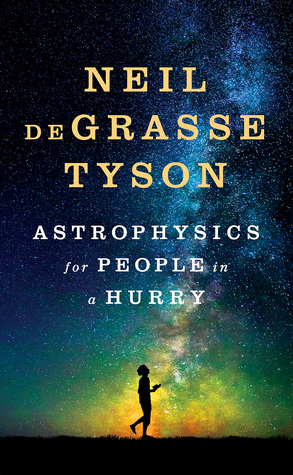
Astrophysics for People in a Hurry
by Neil deGrasse Tyson
Published: May 2017
A very compact, yet quite thorough sampling of astronomical topics. We bounce from the ingredients of the cosmos to particle physics, from relativity to dark matter and a quick breakdown of the electromagnetic spectrum. Woven into the science lessons, we also get some pushes toward critical thinking and humility:
"Ignorance is the natural state of mind for a research scientist. People who believe they are ignorant of nothing have neither looked for, nor stumbled upon the boundary between what is known and unknown in the universe."
Overall, well written and accessible, a must-read for anyone in need of a quick refresher course on the fabric of the universe.
4 out of 5 stars: As someone who loves to read pop-sci physics books but never made it past PHYS 101 in college (*ahem*), I knew this would be right up my alley. Then again, as someone who loves to read pop-sci physics books, I should have realized that there wasn't going to be lot of new information presented here. But that wasn't deGrasse Tyson's fault! This offers a good, solid base of information for anyone who wants to learn about astrophysics but gets overwhelmed by the trail of links you must follow when researching on Wikipedia.
Bonus: after listening to the audiobook, if you crave more NdGT, he gave the 100th commencement at Rice University which I was actually quite a bit bummed about missing (until I remembered how godawfulhot it is outside during graduation season)
Labels:
astronomy,
book review,
nonfiction,
reading is fun,
relevant xkcd,
science
Friday, August 4, 2017
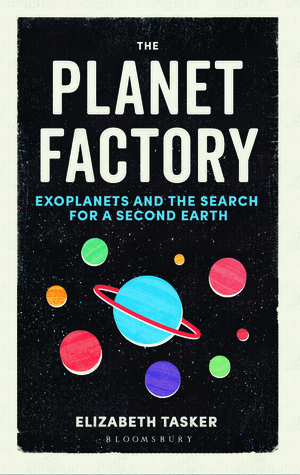
Planet Factory
Planet Factory: Exoplanets and the Search for a Second Earth
by Elizabeth Tasker
To be published: November 2017
In a fantastic primer for budding planetary scientists or armchair explorers, astrophysicist Elizabeth Tasker shares her passion and expertise for the astronomical sciences. Planet Factory chips away at the mountains of exoplanet research and presents it in approachable chunks of historical context, current research and exciting conjecture. Tasker describes how celestial bodies emerge from swirling space dust, details prevailing theories for the varying compositions of known planets and explores the incomprehensibly strange worlds that exist in distant systems (hot Jupiters, super Earths and rogue planets, oh my!).
4 out of 5 stars: There were some stretches of text in the middle that felt a bit tedious and recursive, going through the litany of possible explanations for any findings that didn't fit neatly into the currently accepted theories. But hey, that's science! The repetitive circular critique of hypotheses is both a strength and weakness in the text: it was honestly very refreshing to have each theory delineated with a little dollop of doubt, teaching the reader to question and critically assess previous explanations when presented with new evidence. It's even addressed point-blank in the introduction: any scientist trying to report this amount of interstellar research as fact with the pretense that 'we've got it all figured out' is doing a disservice to the reader and to the field. Overall, this is a very friendly introduction to the awe-inspiring mysteries of our universal neighbors.
Sidenote: I was a little surprised to see no mention of the TRAPPIST-1 system until I realized that announcement was just made February of this year, so of course the author didn't have time to cram in a whole new chapter of reactions to these 7 little buddies and their ultra-cool dwarf. That said, this book leaves me feeling well-equipped to tackle the news of exoplanet discoveries on my own.
// I received this book free from NetGalley in exchange for an honest review
Labels:
ARC,
astronomy,
book review,
female writer,
netgalley,
nonfiction,
reading is fun,
science
Monday, July 31, 2017
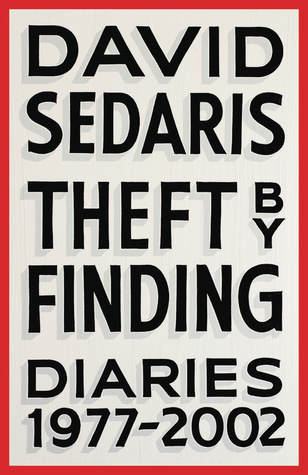
Theft By Finding
Theft by Finding: Diaries 1977-2002
by David Sedaris
Published: May 2017
Nothing like 25 years worth of journal entries to capture the quirks of day-to-day life. Sedaris' wry observations are casual, comfortable and consistent, peppered with hilarious gems and stranger-than-fiction encounters.
4 out of 5 stars: The audiobook is read by David, which makes the journal entries especially intimate and real. And sidenote, how did I not know that David and Amy Sedaris were siblings??
Labels:
book review,
memoir,
nonfiction,
reading is fun
Subscribe to:
Posts (Atom)