Freak Kingdom: Hunter S. Thompson's Manic Ten-Year Crusade Against American Fascism
by Timothy Denevi
Expected Pub: Oct 2018
Freak Kingdom chronicles a decade in the life of Hunter S. Thompson amidst one of the more tumultuous and tense periods of American history. For how often HST found himself in the middle of cross-country era-defining adventures, he may as well be the political speed freak version of Forrest Gump (and I would so watch that movie). Partying with the counterculture Hells Angels and Merry Pranksters, calling out police violence in Chicago, running for Sheriff in Aspen, covering the Chicano Rights movement in LA, and even finding himself at the Watergate hotel bar the night of the infamous break-in.
As someone who used to read Fear and Loathing in Las Vegas every summer break in college, I'm definitely an easy target for this action-packed biography. Still, Denevi's portrayal of HST is well-researched, honest and pulls no punches. I think the spirit of the text is best captured by the book's blurb:
"Hunter S. Thompson is often misremembered as a wise-cracking, drug-addled cartoon character. This book reclaims him for what he truly was: a fearless opponent of corruption and fascism, one who sacrificed his future well-being to fight against it, rewriting the rules of journalism and political satire in the process."
I was genuinely sad when it was over, I want to watch the rest of history play out through lens of this sardonic madman.
// I received this book free from NetGalley in exchange for an honest review.
Publisher: Public Affairs -- but you can also pre-order through IndieBound or my friendly neighborhood indie Brazos Bookstore
Showing posts with label book review. Show all posts
Friday, August 10, 2018
Wednesday, August 1, 2018
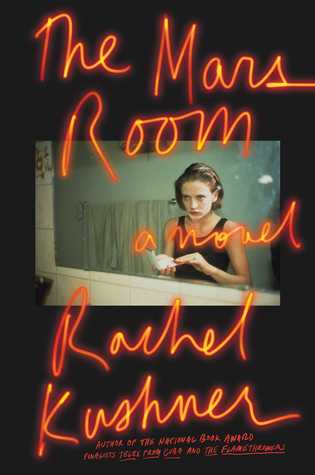
The Mars Room
The Mars Room
by Rachel Kushner
Pub May 2018
Set in a Women's Correctional Facility, The Mars Room is centered on Romy Hall, a woman serving two consecutive life sentences. The story follows a web of narratives to explore the sad realities of life for marginalized populations both in and out of the prison system.
I'm a bit torn in how to review this book as there is plenty that I feel the author executed very well: flipping between people's perspectives kept the pace of the plot interesting, flowing back and forth across timelines created full, complex inmate's histories. I typically enjoy dark, gritty reads and the deadened affect of the characters complemented the tone of the novel perfectly. All that said, upon finishing all I could think was "Wait, is that it?" This may be an unfortunate case of desensitization via pop culture, but I feel that this book didn't really contribute much to the conversation that has not already been explored (both well or flippantly) by "Orange is the New Black" or "Prison Break." Which isn't to say there can be only one... just that I don't quite understand the waves upon waves of accolades this book received. Or for that matter, the Man Booker nomination. I chewed through the novel over a a few plane trips during a vacation, so maybe I just wasn't in the right headspace.
// I received this book free from NetGalley in exchange for an honest review.
by Rachel Kushner
Pub May 2018
Set in a Women's Correctional Facility, The Mars Room is centered on Romy Hall, a woman serving two consecutive life sentences. The story follows a web of narratives to explore the sad realities of life for marginalized populations both in and out of the prison system.
I'm a bit torn in how to review this book as there is plenty that I feel the author executed very well: flipping between people's perspectives kept the pace of the plot interesting, flowing back and forth across timelines created full, complex inmate's histories. I typically enjoy dark, gritty reads and the deadened affect of the characters complemented the tone of the novel perfectly. All that said, upon finishing all I could think was "Wait, is that it?" This may be an unfortunate case of desensitization via pop culture, but I feel that this book didn't really contribute much to the conversation that has not already been explored (both well or flippantly) by "Orange is the New Black" or "Prison Break." Which isn't to say there can be only one... just that I don't quite understand the waves upon waves of accolades this book received. Or for that matter, the Man Booker nomination. I chewed through the novel over a a few plane trips during a vacation, so maybe I just wasn't in the right headspace.
// I received this book free from NetGalley in exchange for an honest review.
Sunday, July 15, 2018
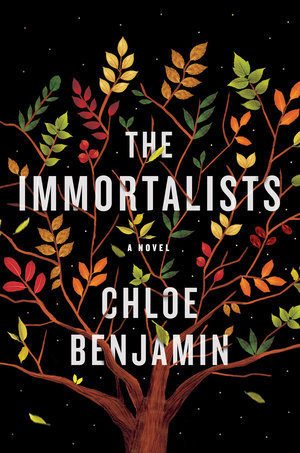
The Immortalists
The Immortalists
by Chloe Benjamin
Pub Jan 2018
How would your life change if you knew what day you'd die? Four siblings bored of summertime visit a Romani mystic and leave with information that will change all of their lives. The story unfolds like a modern day Greek tragedy - bursting with a weird sort of self-propelled cosmic irony. So even though there was plenty about this book that I did like, it was basically everything happening between the plot lines. The bulk of the story kept me pretty bewildered. First off, going against all human instinct, none of the characters even try to rebel against the prophecies that they say they don't believe in. I'd understand this for a few of them to throw expectations to the wind but all four just full blast steer into the skid. Of course it's cliche to reject fate, but that's only because it's so painfully human to do so. On top of that, none of the characters --main or side-- were very likeable (barring Robert the dancer, he was great). Even the most rational ones of the bunch just dove headfirst into some nonsensical situations making it harder and harder to suspend disbelief as things unraveled.
Now, what I did like. Each character had well-crafted, unique interpretations of the idea that "thoughts have wings" that there is power in "mind over matter." So much about our perception of reality not accessible to our conscious mind and this was explored beautifully. From her discussions of the placebo effect in medicine to physical and psychological forcing of a magicians illusions, this was where Benjamin's reflections on mortality and free will really shone through.
by Chloe Benjamin
Pub Jan 2018
How would your life change if you knew what day you'd die? Four siblings bored of summertime visit a Romani mystic and leave with information that will change all of their lives. The story unfolds like a modern day Greek tragedy - bursting with a weird sort of self-propelled cosmic irony. So even though there was plenty about this book that I did like, it was basically everything happening between the plot lines. The bulk of the story kept me pretty bewildered. First off, going against all human instinct, none of the characters even try to rebel against the prophecies that they say they don't believe in. I'd understand this for a few of them to throw expectations to the wind but all four just full blast steer into the skid. Of course it's cliche to reject fate, but that's only because it's so painfully human to do so. On top of that, none of the characters --main or side-- were very likeable (barring Robert the dancer, he was great). Even the most rational ones of the bunch just dove headfirst into some nonsensical situations making it harder and harder to suspend disbelief as things unraveled.
Now, what I did like. Each character had well-crafted, unique interpretations of the idea that "thoughts have wings" that there is power in "mind over matter." So much about our perception of reality not accessible to our conscious mind and this was explored beautifully. From her discussions of the placebo effect in medicine to physical and psychological forcing of a magicians illusions, this was where Benjamin's reflections on mortality and free will really shone through.
Friday, July 13, 2018
Sons of Cain
Sons of Cain: A History of Serial Killers from the Stone Age to the Present
by Peter Vronsky
To be Published: Aug 2018
“Justice withers, prison corrupts, and society gets the criminal it deserves.”
Putting to rest the idea that serial killings were an epidemic of the 20th century, historian Peter Vronsky sets out to explore the ancient and not-so-ancient history of pattern murderers across (mostly Western) societies. What I found most interesting is the argument that these crimes hold a mirror to the society and cultural conflicts of their time.
Murder, necrophilia, or cannibalism may not have been seen as ethical dilemmas until primitive homo sapiens began to develop a fear or reverence of death. But once cultural taboos were in place, the fantasy and delusions of serial murderers manifest as a reflection of their time. For instance in Medieval Europe, these types of murders were often attributed to supernatural causes such as werewolves, vampires or demonic possession. The pathologically cruel were welcomed into the folds of Inquisitions and witch hunts. Then, the Industrial Age and destabilization of the rural workforce incited an slew of murders targeting servants and working girls etc. This book was a fascinating recap of Western History through the observed patterns of serial murder. From World Wars to Civil Rights Movements to technological advancements, each generational wave brings forth new varieties of and new explanations for these human monsters. But the song remains the same...
This book relies heavily on historical research and mountains of statistics. While definitely a strength, it should still be consumed critically. Vronsky is typically forthright in identifying sources and defining variables, but there are times I found myself paging through the References and left feeling a bit misled by the phrasing of his interpretation. This doesn't detract from the entertainment of the book overall, but I'd be cautious before citing any hypotheses as fact. That said, he does a fantastic job of name-dropping other books on the subject giving the reader plenty of opportunity to read up on it themselves!
// I received this book free from NetGalley in exchange for an honest review.
Check out the author's website to order or get more info
by Peter Vronsky
To be Published: Aug 2018
“Justice withers, prison corrupts, and society gets the criminal it deserves.”
- Lacassagne
Putting to rest the idea that serial killings were an epidemic of the 20th century, historian Peter Vronsky sets out to explore the ancient and not-so-ancient history of pattern murderers across (mostly Western) societies. What I found most interesting is the argument that these crimes hold a mirror to the society and cultural conflicts of their time.
Murder, necrophilia, or cannibalism may not have been seen as ethical dilemmas until primitive homo sapiens began to develop a fear or reverence of death. But once cultural taboos were in place, the fantasy and delusions of serial murderers manifest as a reflection of their time. For instance in Medieval Europe, these types of murders were often attributed to supernatural causes such as werewolves, vampires or demonic possession. The pathologically cruel were welcomed into the folds of Inquisitions and witch hunts. Then, the Industrial Age and destabilization of the rural workforce incited an slew of murders targeting servants and working girls etc. This book was a fascinating recap of Western History through the observed patterns of serial murder. From World Wars to Civil Rights Movements to technological advancements, each generational wave brings forth new varieties of and new explanations for these human monsters. But the song remains the same...
This book relies heavily on historical research and mountains of statistics. While definitely a strength, it should still be consumed critically. Vronsky is typically forthright in identifying sources and defining variables, but there are times I found myself paging through the References and left feeling a bit misled by the phrasing of his interpretation. This doesn't detract from the entertainment of the book overall, but I'd be cautious before citing any hypotheses as fact. That said, he does a fantastic job of name-dropping other books on the subject giving the reader plenty of opportunity to read up on it themselves!
// I received this book free from NetGalley in exchange for an honest review.
Check out the author's website to order or get more info
Labels:
book review,
history,
netgalley,
nonfiction,
reading is fun,
serial killers
Thursday, June 21, 2018
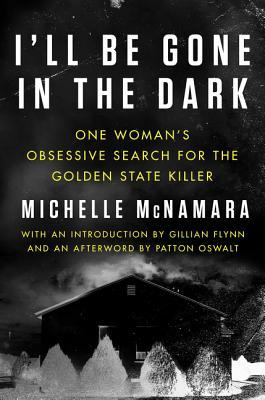
I'll Be Gone in the Dark
by Michelle McNamara
Pub Feb 2018
Short version: A riveting read. Truly compelling (& horrifying) write up on the history of the Golden State Killer's crimes and investigation. But I have lots of mixed feelings anyway.
Long Version: On the one hand, I relate to the author's spiral into obsession with serial murder mysteries. In fact, I recently came across my middle-to-high school diary and a good chunk of it was devoted to cracking the Zodiac Killer's cryptograms. (Though I can't say my motivations were very noble, I was just fascinated with catching a glimpse into the deepest darkest crevasses of humanity. Plus I fucking loved ciphers). After undergrad, I even considered applying to graduate programs focused on psychopathology research. So from that angle, I was completely hooked on this text. It's clearly a thorough, thoughtful account meant to shine a light one of the most heinous criminals in recent US history.
Yet somehow despite all of that, the book still left me a bit unsettled. First of all, I wasn't expecting this to be part memoir. When she started going on about her own life and childhood I was genuinely worried she was going to weave herself into the entirety of the book, but thankfully it was just to give some background or establish context here and there. Beyond that, I'm generally suspicious of media riding this new "true crime" wave. It just feels... exploitative. McNamara sort of addresses this early on saying, “...I’ve always been aware of the fact that, as a reader, I am actively choosing to be a consumer of someone else’s tragedy. So like any responsible consumer, I try to be careful in the choices I make. I read only the best: writers who are dogged, insightful, and humane.”
But even with her sensitive portrayal of the victims, the book still feels like it exists purely as a vehicle to showcase her writing. That or she wanted tangible justification for how much of her life she let this investigation consume. She did good work and she kept the case fresh in people's minds: I think the point of this book was to continue to keep the narrative alive, reaching as large an audience as possible in an effort to track down more clues. But man, sometimes her "insight" was so amateur I'd literally cringe.
Now this could totally be the bias of hindsight, but it honestly doesn't seem like anything she contributed-- her hours and hours of combing through files and interviewing detectives and compiling insane amounts of data-- actually did anything to progress the investigation. The lead investigator was on the right track all on his own, it was just a matter of time.
by Michelle McNamara
Pub Feb 2018
Short version: A riveting read. Truly compelling (& horrifying) write up on the history of the Golden State Killer's crimes and investigation. But I have lots of mixed feelings anyway.
Long Version: On the one hand, I relate to the author's spiral into obsession with serial murder mysteries. In fact, I recently came across my middle-to-high school diary and a good chunk of it was devoted to cracking the Zodiac Killer's cryptograms. (Though I can't say my motivations were very noble, I was just fascinated with catching a glimpse into the deepest darkest crevasses of humanity. Plus I fucking loved ciphers). After undergrad, I even considered applying to graduate programs focused on psychopathology research. So from that angle, I was completely hooked on this text. It's clearly a thorough, thoughtful account meant to shine a light one of the most heinous criminals in recent US history.
Yet somehow despite all of that, the book still left me a bit unsettled. First of all, I wasn't expecting this to be part memoir. When she started going on about her own life and childhood I was genuinely worried she was going to weave herself into the entirety of the book, but thankfully it was just to give some background or establish context here and there. Beyond that, I'm generally suspicious of media riding this new "true crime" wave. It just feels... exploitative. McNamara sort of addresses this early on saying, “...I’ve always been aware of the fact that, as a reader, I am actively choosing to be a consumer of someone else’s tragedy. So like any responsible consumer, I try to be careful in the choices I make. I read only the best: writers who are dogged, insightful, and humane.”
But even with her sensitive portrayal of the victims, the book still feels like it exists purely as a vehicle to showcase her writing. That or she wanted tangible justification for how much of her life she let this investigation consume. She did good work and she kept the case fresh in people's minds: I think the point of this book was to continue to keep the narrative alive, reaching as large an audience as possible in an effort to track down more clues. But man, sometimes her "insight" was so amateur I'd literally cringe.
Now this could totally be the bias of hindsight, but it honestly doesn't seem like anything she contributed-- her hours and hours of combing through files and interviewing detectives and compiling insane amounts of data-- actually did anything to progress the investigation. The lead investigator was on the right track all on his own, it was just a matter of time.
Saturday, June 16, 2018
The Idiot
by Elif Batuman
Published: March 2017
If you have the chance to read this while laying on a towel in your backyard — or whatever lets you relive your favorite adolescent summer breaks — I highly recommend it. Nothing throws me back into past versions of myself like a well-written bildungsroman with an endearingly naive but resilient protag.
College freshman Selin is learning to navigate elite university life in the 90's. She’s overanalyzing art and film, deconstructing theories of psycholinguistics and making friends with every fun ivy league stereotype along the way.
I get why this got nominated for a Pulitzer, Batuman has a thoughtful, observant way of capturing the world that was pleasantly refreshing. So maybe there are bits that got a little slow or parts where you just wanna shake the main character (until you remember what it was like to be 19 and allow some empathy... for her and for your own past self). To keep this spoiler free, I will just say that I found the ending to be very upsetting until I had a good think about how the main character would have felt about it. And then I had a good laugh. Well played.
by Elif Batuman
Published: March 2017
If you have the chance to read this while laying on a towel in your backyard — or whatever lets you relive your favorite adolescent summer breaks — I highly recommend it. Nothing throws me back into past versions of myself like a well-written bildungsroman with an endearingly naive but resilient protag.
College freshman Selin is learning to navigate elite university life in the 90's. She’s overanalyzing art and film, deconstructing theories of psycholinguistics and making friends with every fun ivy league stereotype along the way.
I get why this got nominated for a Pulitzer, Batuman has a thoughtful, observant way of capturing the world that was pleasantly refreshing. So maybe there are bits that got a little slow or parts where you just wanna shake the main character (until you remember what it was like to be 19 and allow some empathy... for her and for your own past self). To keep this spoiler free, I will just say that I found the ending to be very upsetting until I had a good think about how the main character would have felt about it. And then I had a good laugh. Well played.
Thursday, June 14, 2018
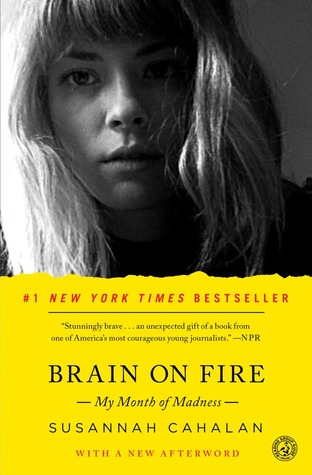
Brain on Fire
Brain on Fire: My Month of Madness
by Susanna Cahalan
Published: Aug 2013
With this memoir, Susanna Cahalan accomplishes the extremely intimate and humbling task of piecing together her firsthand experience with an inexplicable and disabling illness. She suffers from seizures, paranoid hallucinations, and alexia (an inability to read) but perhaps the most unsettling aspect is that even top neurologists were at a loss in determining the cause. Though the bulk of her time inpatient escapes her memory, she puts her New York Post reporting skills to work, examining hospital security video, interviewing doctors and nurses and family members (who knew The Post wrote about more than nonsense celebrity gossip?). She does an excellent job of introducing and explaining medical and psychological terminology throughout the text making it an excellent candidate for required reading.
As someone who administers neuropsychological assessments for research studies, it was really interesting to get the patient's perspective on cognitive testing. She captures the frustration and the effort it takes to trudge through the mental fogginess incredibly (is it a spoiler to reveal her diagnosis? Here it is anyway, for the curious: Anti-NMDA-receptor autoimmune encephalitis.). The whole experience was also a piercing glance into the american healthcare system, and research-based western medicine as a whole: the terrifying reality that no matter how far we've come in understanding the human body, there is still so much we have yet to learn.
The whole narrative is reminiscent of Jill Bolte Taylor's Stroke of Insight - a memoir written by a neuroanatomist who experiences a stroke. But I personally enjoyed Cahalan's write up SO MUCH MORE. Where Bolte Taylor uses the experience to confirm the existence of a higher power and feed her spirituality, Cahalan reflects more on the existential chaos that is first-person experience, our chaotic construction of reality via perception and the fallibility of memory. Now that's my jam.
SaveSave
by Susanna Cahalan
Published: Aug 2013
With this memoir, Susanna Cahalan accomplishes the extremely intimate and humbling task of piecing together her firsthand experience with an inexplicable and disabling illness. She suffers from seizures, paranoid hallucinations, and alexia (an inability to read) but perhaps the most unsettling aspect is that even top neurologists were at a loss in determining the cause. Though the bulk of her time inpatient escapes her memory, she puts her New York Post reporting skills to work, examining hospital security video, interviewing doctors and nurses and family members (who knew The Post wrote about more than nonsense celebrity gossip?). She does an excellent job of introducing and explaining medical and psychological terminology throughout the text making it an excellent candidate for required reading.
As someone who administers neuropsychological assessments for research studies, it was really interesting to get the patient's perspective on cognitive testing. She captures the frustration and the effort it takes to trudge through the mental fogginess incredibly (is it a spoiler to reveal her diagnosis? Here it is anyway, for the curious: Anti-NMDA-receptor autoimmune encephalitis.). The whole experience was also a piercing glance into the american healthcare system, and research-based western medicine as a whole: the terrifying reality that no matter how far we've come in understanding the human body, there is still so much we have yet to learn.
The whole narrative is reminiscent of Jill Bolte Taylor's Stroke of Insight - a memoir written by a neuroanatomist who experiences a stroke. But I personally enjoyed Cahalan's write up SO MUCH MORE. Where Bolte Taylor uses the experience to confirm the existence of a higher power and feed her spirituality, Cahalan reflects more on the existential chaos that is first-person experience, our chaotic construction of reality via perception and the fallibility of memory. Now that's my jam.
SaveSave
Labels:
book review,
female writer,
memoir,
memory,
nonfiction,
reading is fun
Saturday, February 24, 2018
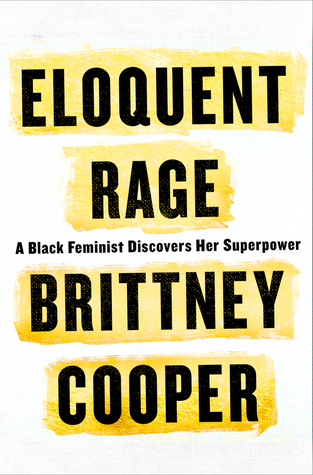
Eloquent Rage: A Black Feminist Discovers Her Superpower
"When Beyoncé tells all the fly chicks to get in formation, she is asking us to get our shit together so we can do the work that needs to be done. An the stakes are high as hell, because Black people are being killed. So, she reminds us, 'Slay, trick. Or you get eliminated.' Now that might be a reference to some kind of dance competition. But it's also a revision of 'Never let them catch you slipping.' Be the best. Be exceptional. Or get eliminated."Part memoir, part lecture series, these essays cover some serious ground. Cooper tackles everything from domestic abuse to intersectional feminism to Respectability Politics and the racism within the War on Drugs - all informed by personal experience but transformed into well-researched lessons on deconstructive sociology. The title was born from her journey learning to channel rage at injustice into productive, academic pursuits and it perfectly captures the thematic undercurrent of collection.
Cooper is well-educated and well spoken, a self-designated know-it-all and high achiever. This is both a strength and a weakness in her narrative voice. She is obviously brilliant and her insights challenge the reader, forcing us to reconsider our own preconceptions. But at times this is preached with a level of certainty that sidesteps her own personal journey: the roundabout mental side-streets that she has taken to end up with her current understanding of the world. Much of the book showcases how her beliefs have evolved over time with little forgiveness for those who still exist in these planes of ignorance. I certainly had a lot to learn from these essays, so perhaps this criticism comes from my own internal defensiveness. Actually yea, that's probably it. Still, Cooper herself says, "Intersectionality is not only not objective, it sneers at claims to objectivity, arguing that none of us is purely objective. We all come with a perspective and an agenda. We all have investments. We all have skin in the game." So part of this learning process is for us as readers to acknowledge our own sets of privilege and being willing to listen to each other's experiences and truths without judgement. Another part is taking a step back from our knee-jerk defensiveness and rather than saying to yourself "But I'm one of the good ones!" ask yourself, "What if I'm one of the bad ones?" and work from there.
Eloquent Rage is an excellent and necessary book that is somehow as funny and irreverent as it is solemn and deadly fucking serious. Highly recommend it to anyone interested in Black Feminism - in Cooper's own words, "America needs a homegirl intervention in the worst way." The text falls somewhere between Ta-Nehisi Coates' We Were Eight Years in Power and Roxane Gay's Bad Feminist on the highbrow-to-accessible scale of discourse (both of which are obviously also fantastic and eye-opening in their own right). To wrap up, here are some gem pull-quotes:
"All voters should have access to candidates that make them feel recognized, but there's a problem when your notion of recognition is predicated on someone else's exclusion. There's a problem when visibility becomes a zero-sum game, where making one group's demands visible make every other group's political concerns obscure. Only white supremacy demands such exacting and fatalistic math."
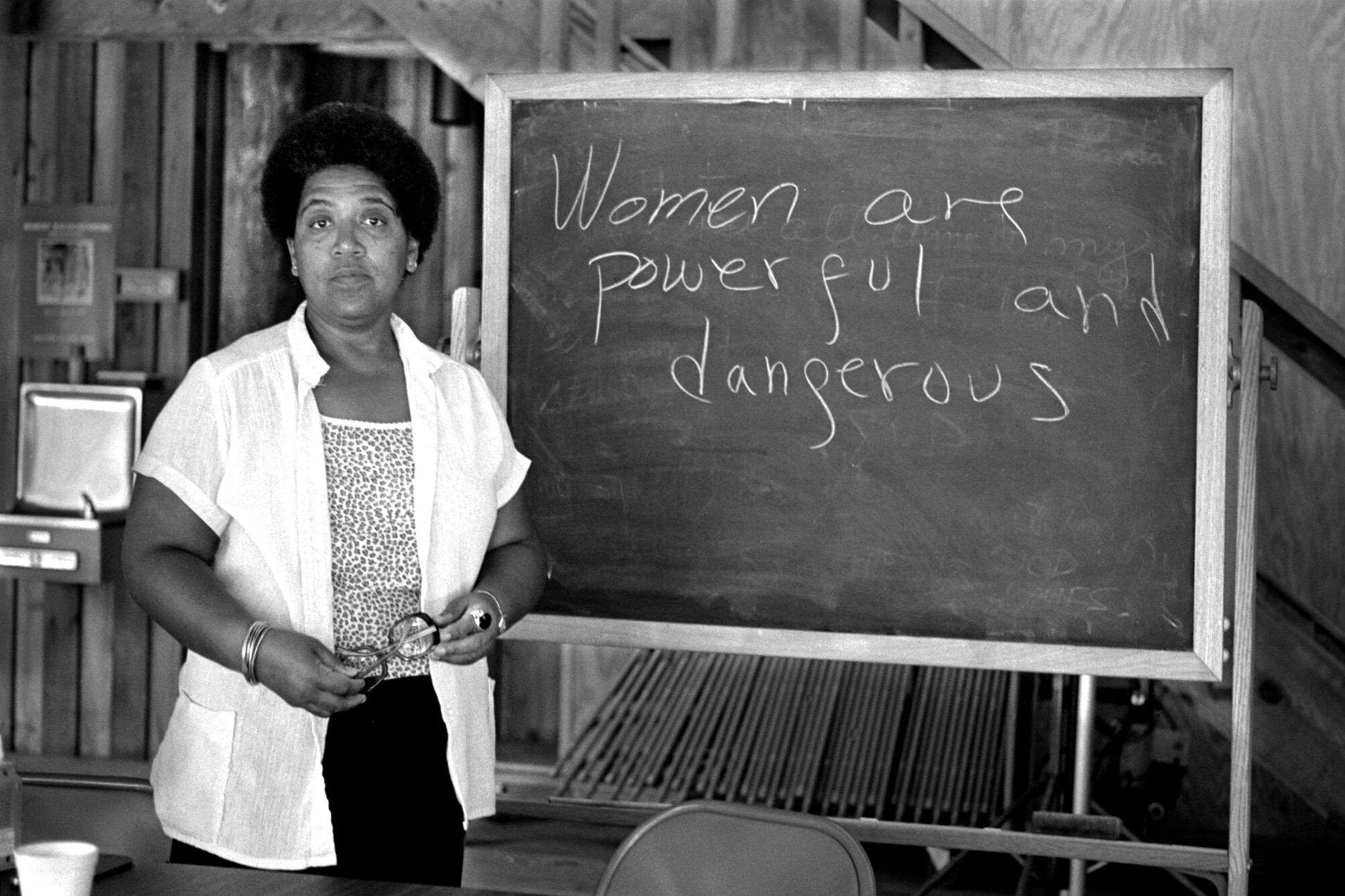
"The term 'feminist killjoys' is well-earned. Sometimes, in the bid for rightness, feminists and hyperwoke folks can take the joy out of everything. I actually think its irresponsible to wreck shop in people's world without giving them the tools to rebuild. It's fine to quote Audre Lorde* to people and tell them, 'The master's tools will never dismantle the master's house.' The harder work is helping people find better tools to work with. We have to smash the patriarchy, for sure. And we have to dismantle white supremacy, and homophobia, and a whole bunch of other terrible shit that makes life difficult for people. Rage is great at helping us to destroy things. That's why people are so afraid of it."
Eloquent Rage: A Black Feminist Discovers Her Superpower
by Brittney Cooper
Published Feb 20 2018
// I received this book free from NetGalley in exchange for an honest review. All quotes are taken from the advance reader's copy and may not accurately reflect the final published version.
Want more Brittney Cooper? Check out her Salon.com essays, her personal site / twitter, the Crunk Feminist Collective she co-edits, or this interview on Popsugar she did to promote Eloquent Rage!
*![]() |
| Audre Lorde, self described “black, lesbian, mother, warrior, poet” |
Saturday, February 17, 2018
The Philosopher's Flight
by Tom Miller
Published: Feb 2018
World War I rages in Europe and teen Robert Weekes is stuck at home in rural Montana, desperate to join the war efforts. He's dreamed of enlisting in the elite Rescue & Evac squad for as long as he can remember, but there are more than a few hurdles in his path. He'd need to become an expert empirical philosopher, or sigilrist: a practitioner well-versed in the art of drawing sigils to manipulate physical forces and matter (think magic without wands). Even though his tough-as-nails war-hero mother has taught him the basics, this cryptic field of study is so heavily dominated by women that men are rarely, if ever, train professionally. His talents eventually land him a university scholarship, but it's only the beginning of the trials and tribulations he must face to pursue his dream.
The Philosopher's Flight is a fun light read that pairs plausible alchemy with civil rights activism and rolls it all into an adventurous coming of age tale. Though it reads like a YA novel, it doesn't shy away from the darkness and violence that accompanies systemic oppression. I really enjoyed the "gender-flip" here-- it's a complex and nuanced reversal of the script. Even though women seem to have more of an aptitude for sigilry it certainly doesn't translate into total control over society. They are respected in some spheres and denounced in others, existing in a space somewhere between mutants in the X-Men Universe and the "witches" on trial in Salem. As an added dimension we get a quick glimpse into the dynamics of race relations in early 1900's America, but for the most part this remains unexplored.
Fans of Harry Potter and the Methods of Rationality will appreciate the effort Miller makes to ground empirical philosophy in science. The magical forces in the story are mysterious but not impenetrable (we get at least one character trying to decipher how the packets of magic energy travel in space). Plus with all the focus on rescue missions and medical applications of sigils, it's really no surprise the author is an EMT turned ER Doctor (turned novelist!).
In all honesty, I wasn't hooked until about three-fourths of the way through when suddenly, I couldn't put it down. The first parts build up the slow simmering of tension and context until finally it all explodes into a rolling boil of drama that leaves you wanting more. According to this interview with author Tom Miller (which also details how his observations of subtle sexism as an EMT helped inform the novel) it's going to be a five part series. So that's exciting. Can't wait to see how this alternate-history world progresses. If stalking the webiste of the publisher is any indication, we may have "Philosopher's War" to look forward to (though Goodreads seems to indicate this is just an outdated alternate title/cover for Flight).// I received The Philosopher's Flight as part of my subscription to Book of the Month
Wednesday, February 14, 2018
Feel Free by Zadie Smith
Feel Free is a phenomenal round up of Zadie Smith's articles and essays over the last ten or so years. Not all of the pieces were for me personally (specifically the heavy dose of highbrow lit crit), but man, the rest really struck me down to my core. So whether you identify as a writer, reader, artist, musician, historian philosopher, millennial, gen-Xer, black, white, or mixed: there's something that will speak to you, trust me. Together the essays weave a rich tapestry of voices, all varying shades of Smith. Deeply personal experiences presented alongside stoic, critical analyses. She waxes poetic on the importance of libraries, how technology shifts reality, pluralism and the significance of race, why she was terrified of writing in the first person and oh yeah this one time she burned down her Italian apartment. Seriously, something for everyone."I find myself to be radically discontinuous with myself."
I didn't collect all of these links to stick it to the publishing industry or help people bypass checking out the book for themselves. Just thought it'd be nice to compile the works into one easy-to-access spot for anyone else wanting to reference the texts digitally. Our benevolent overlords at Google Books have a ctrl+f-able preview available but it's not really the same.
PART I: IN THE WORLD
Northwest London Blues
Elegy for a Country's Seasons
Fences: A Brexit Diary
On Optimism and Despair
PART II: IN THE AUDIENCE
Generation Why?
The House that Hova Built
Brother from Another Mother
Some Notes on Attunement
Windows on the Will: Anomalisa
Dance Lessons for Writers
PART III: IN THE GALLERY
Killing Orson Welles at Midnight
Crazy They Call me
A Bird of Few Words: Narrative Mysteries in the Paintings of Lynette-Yiadom Boakye
Getting in and Getting Out
MIA: Flaming June, Alte Frau by Balthasar Denner, Mark Bradford's Niagra, The Tattered Ruins of the Map: On Sarah Sze's Centrifuge
Crash by JG Ballard
The Buddha of Suburbia by Hanif Kureishi
Notes on NW
The Harper's Columns
The I Who is not Me (couldn't find the transcript, but this is an article about it)
PART V: FEEL FREE
Life-Writing
The Bathroom & Meet Justin Bieber! (couldn't find the transcript, but this is an article about it)
Man Versus Corpse
Love in the Gardens
Find your Beach
Joy
MIA: The Shadow of Ideas
And while I was scouring the web for EVERYTHING ZADIE I came across two beautiful commencement addresses that I may as well throw into this heap of links:
2014 New School Commencement Address
2016 Grinnell College Commencement Address
Happy Reading!
If you've found any of the ones I'm missing are easily accessible and I'm just dumb, drop me a comment and I'll add it in!
// and now a guide to my header collage//
i.e. in which essays you will find reference to these lovely people/charactersAlso is it just me or do Phillip Roth and Denner's Alte Frau look like they're related?
Joni Mitchell > Notes on Attunement
Scowling Old Woman > Alte Frau by Balthasar Denner
Billie Holiday > Crazy They Call Me
Michael Jackson, Prince, Beyonce > Dance Lessons for Writers
Jesse Eisenberg in The Social Network > Generation Why?
Harold Lloyd hanging off a clock in Safety Last! > Killing Orson Welles at Midnight
Key & Peele > Brother from Another Mother
Man with bird, painting titled Mercy over Matter > A Bird of Few Words
Girl lounging in an orange dress > Flaming June
Jay-Z > The House that Hova Built
Zadie Smith looking gorgeous > All of em!
Phillip Roth > The I Who Isn't Me
Daniel Kaluuya in Get Out > Getting In and Out
Feel Free: Essays
by Zadie Smith
Published: February 2018
Saturday, January 27, 2018
We're All Spinsters Here

The Merry Spinster: Tales of Everyday Horror
by Mallory Ortberg
To Be Published: March 2018
Thanks to Disney's whimsical remakes of capital "R" Romantic folklore, my only childhood exposure to fairytales was cheerful princesses singing their way to happy endings surrounded by industrious animal friends. But we're all adults here. I think by now, we all know these are just sugar-coated versions of some pretty gnarly source material.
The Merry Spinster meets us somewhere in the middle with 11 twisted versions of well known fables and fairy tales that are somehow as playful as they are sinister. The shorts are adapted from Mallory Ortberg's series Children's Stories Made Horrific from the
![]() |
| "The danger of silence is that someone who wishes to hear a yes will not go out of his way to listen for a no. - "The Six Boy-Coffins", The Merry Spinster 2 |
Reading through past interviews, I feel like Ortberg's love for the title might be what willed the rest of the book into existence. It's super fitting too: the Merry Spinster archetype may be the only uplifting motif running through these bleak pages. So on that note, here's a quote from the author explaining the concept beautifully:
"I would always love for my next book to be a light comic novella called The Merry Spinster and to explore those themes of glorious female solitude. I think female solitude is a mental condition as well as a physical state. You can be married and a spinster. I think spinster is an identity every woman can claim, if she will. … I feel like a lot of women, or a lot of feminists, joke about taking to the sea or living alone in a cottage as this kind of fun freedom."
// I received this book free from NetGalley in exchange for an honest review. Quotes are taken from an advanced readers copy and may not be final. Please refer to a finished copy.
// Footnotes
1. The Toast is dead, long live The Toast...You'd better believe as soon as it's back online I'm linking the shit out of it.
2. This is a random art card from the Smith-Waite tarot deck and has nothing to do with the book, but I tweaked it a teensy bit and now it's just PERFECT you'll see.
Monday, January 15, 2018
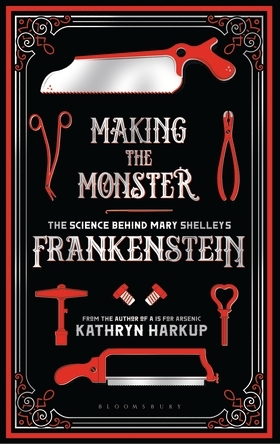
Making the Monster, or Happy 200th Birthday Frankenstein!
Making the Monster: The Science Behind Mary Shelley's Frankenstein
by: Kathryn Harkup
To be Published: Feb 2018
2018 marks the 200th anniversary of Mary Shelley's gothic masterpiece-- Frankenstein; or The Modern Prometheus. Widely recognized as one of the first (if not the first) work of science fiction, this revolutionary novel has truly withstood the test of time (and continues to haunt middle school literary criticism to this day). Some may already know the broad strokes of how this story came to life: on a dark and stormy night (of course), 18 year old Mary joins her friends in a competitive game to see who can write the best horror story. Inspired by the rational ideals of the Enlightenment and recent advances in electricity research, Mary writes the short story that she will later develop into the novel we know and love.
Making the Monster dives quite bit deeper into the historical context of this work, piecing together not only Mary's biography but those of her family, friends and any intellectual or "natural philosopher" she may have been influenced by. This is interwoven with the upheavals in politics and the sciences leading up to her education and journey away from home. Though the narrative unravels into countless tangents and side-histories, it is well-organized and cohesive. This is a book for anyone who enjoys reading about the history of scientific progress-- the controversies, the blunders, and the experiments that got us where we are today1. Whether or not you enjoyed (or even read) Frankenstein, if you appreciate its significance in history and are ready to fall down the rabbit-hole of alchemy, galvanism, and medical experimentation (oh my!), check it out.
// I received this book free from NetGalley in exchange for an honest review.
1. If weird medical history is your thing and you're not already listening to the Maximum Fun podcast "Sawbones" Run, don't walk.
by: Kathryn Harkup
To be Published: Feb 2018
2018 marks the 200th anniversary of Mary Shelley's gothic masterpiece-- Frankenstein; or The Modern Prometheus. Widely recognized as one of the first (if not the first) work of science fiction, this revolutionary novel has truly withstood the test of time (and continues to haunt middle school literary criticism to this day). Some may already know the broad strokes of how this story came to life: on a dark and stormy night (of course), 18 year old Mary joins her friends in a competitive game to see who can write the best horror story. Inspired by the rational ideals of the Enlightenment and recent advances in electricity research, Mary writes the short story that she will later develop into the novel we know and love.
Making the Monster dives quite bit deeper into the historical context of this work, piecing together not only Mary's biography but those of her family, friends and any intellectual or "natural philosopher" she may have been influenced by. This is interwoven with the upheavals in politics and the sciences leading up to her education and journey away from home. Though the narrative unravels into countless tangents and side-histories, it is well-organized and cohesive. This is a book for anyone who enjoys reading about the history of scientific progress-- the controversies, the blunders, and the experiments that got us where we are today1. Whether or not you enjoyed (or even read) Frankenstein, if you appreciate its significance in history and are ready to fall down the rabbit-hole of alchemy, galvanism, and medical experimentation (oh my!), check it out.
// I received this book free from NetGalley in exchange for an honest review.
![]() |
| *blows dust off drawing pad* 2018 resolutions here we go! |
Labels:
ARC,
book review,
female writer,
history,
netgalley,
nonfiction,
reading is fun,
science,
science fiction
Sunday, December 24, 2017
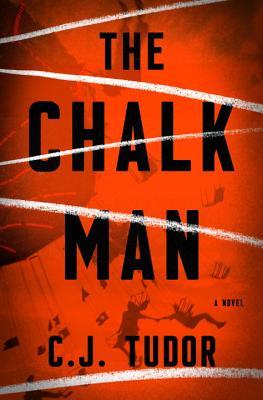
The Chalk Man
The Chalk Man
by C.J. Tudor
To be Published: Jan 2018
Reminiscent of Stand By Me (/The Body) this whodunnit centers on a group of 12 year olds and the unsolved mystery that plagues their small town. Flashing between 1986 and 2016, we piece together events from their childish misadventures leading up to their discovery of a brutal murder and the resurrection of the mystery decades later.
3 of 5 stars : Definitely a page-turner, it has a good pace, solid story and a satisfying conclusion.** I unintentionally breezed through the book over the holiday weekend thanks to some cold and gloomy book-friendly weather! Without treading into spoiler territory, let's just say, not impressed overall. Ending every chapter on a cliffhanger really brought me back to my Goosebumps / Fear Street days, so maybe the overarching "meh" feeling comes from it feeling a bit YA fic. Which isn't a terrible thing in and of itself - just not my cuppa anymore. One thing I did really enjoy was the occasional asides on existence and memory - never forget kids, deep down we're all unreliable narrators.
**that said I'm still left with some questions and I can't decide whether this was sloppy, intentional or I'm just dense. Usually the latter so *shrugs*
PS: Found a nice summary video from C.J. Tudor herself:
Labels:
book of the month,
book review,
botm,
female writer,
fiction,
mystery,
reading is fun,
thriller
Friday, November 24, 2017
Making Sense of the Alt-Right
by George Hawley
Published: September 2017
Making Sense of the Alt-Right offers a quick primer on the relatively new extremist offshoot of American conservatism.
The Alternative Right's primary focus is aggressive, irreverent white-identitarian politics, but as it gains traction has also begun to capture a jumbled web of disgruntled conservatives seeking an outlet from the mainstream.
Hawley details the ideological foundations (racial realism, paleoconservatism, radical libretarianism) as well as the projections for the future of the movement in Trump's America. Because there is no centralized leader, the messages and strategies that "go viral" are the ones that are perpetuated, giving the movement a haphazard, disjointed quality.
4.5 out of 5 stars: Somehow despite being one of the biggest buzzwords of the 2016 election and following year, I didn't know much more about this trend than the fact that it existed and it's lifeblood was extremist hate speech. Turns out, news coverage of the group was only hyperbolic in insinuating the group was organized and cohesive (so don't worry, all of the horrible racist, misogynist, shocking language you've heard spewed really are quite accurate). Well-researched and very thorough read - I will definitely be checking out Hawley's other books in the hopes to shed some light on other factions within our political spectrum. Alt-left anyone?
// I received this book free from NetGalley in exchange for an honest review.
by George Hawley
Published: September 2017
Making Sense of the Alt-Right offers a quick primer on the relatively new extremist offshoot of American conservatism.
The Alternative Right's primary focus is aggressive, irreverent white-identitarian politics, but as it gains traction has also begun to capture a jumbled web of disgruntled conservatives seeking an outlet from the mainstream.
Hawley details the ideological foundations (racial realism, paleoconservatism, radical libretarianism) as well as the projections for the future of the movement in Trump's America. Because there is no centralized leader, the messages and strategies that "go viral" are the ones that are perpetuated, giving the movement a haphazard, disjointed quality.
4.5 out of 5 stars: Somehow despite being one of the biggest buzzwords of the 2016 election and following year, I didn't know much more about this trend than the fact that it existed and it's lifeblood was extremist hate speech. Turns out, news coverage of the group was only hyperbolic in insinuating the group was organized and cohesive (so don't worry, all of the horrible racist, misogynist, shocking language you've heard spewed really are quite accurate). Well-researched and very thorough read - I will definitely be checking out Hawley's other books in the hopes to shed some light on other factions within our political spectrum. Alt-left anyone?
// I received this book free from NetGalley in exchange for an honest review.
Labels:
ARC,
book review,
first race war huh,
netgalley,
nonfiction,
politics,
reading is fun
Tuesday, November 14, 2017
Inside Private Prisons
Inside Private Prisons: An American Dilemma in the Age of Mass Incarceration
by Lauren-Brooke Eisen
Published: November 2017
First and foremost, Inside Private Prisons is an investigation of the benefits and downsides of privatizing the American prison system. But of course, everything is more complicated than it seems. A journey through the history of privatization goes on to explore our sordid past (and present) of prisoners as commodities, how activists use prison divestment as a tool, and the extent to which immigrant detention centers fit into the prison industrial complex. Overarching the span of the book, readers are encouraged to reflect on the nature of the carceral state: how did we get to this age of mass incarceration? How will our current political landscape shape the future?
3.5 out of 5 stars: This book was well-researched almost to a fault - just bursting at the seams with information. The overarching structure of the book sets a solid foundation for discussion, but I felt within each chapter the narrative tends to diverge wildly, leaving some anecdotes and facts a bit scattered and out of place. On the one hand, I want to casually recommend this to anyone with zero background knowledge of the United States prison system (like me!) because it such a strong collection of data and eye-opening realities*. But if I'm completely honest it was a bit of a struggle for me to get through, probably better suited as a required reading text in a college course.
* Did you know small prison towns get to headcount prisoners in the census? So even though prisoners can't vote, they brings more political weight to the region AND bring down the mean income level qualifying the town for federal aid. What a fun new way to gerrymander over-representation for rural america!
// I received this book free from NetGalley in exchange for an honest review.
by Lauren-Brooke Eisen
Published: November 2017
First and foremost, Inside Private Prisons is an investigation of the benefits and downsides of privatizing the American prison system. But of course, everything is more complicated than it seems. A journey through the history of privatization goes on to explore our sordid past (and present) of prisoners as commodities, how activists use prison divestment as a tool, and the extent to which immigrant detention centers fit into the prison industrial complex. Overarching the span of the book, readers are encouraged to reflect on the nature of the carceral state: how did we get to this age of mass incarceration? How will our current political landscape shape the future?
3.5 out of 5 stars: This book was well-researched almost to a fault - just bursting at the seams with information. The overarching structure of the book sets a solid foundation for discussion, but I felt within each chapter the narrative tends to diverge wildly, leaving some anecdotes and facts a bit scattered and out of place. On the one hand, I want to casually recommend this to anyone with zero background knowledge of the United States prison system (like me!) because it such a strong collection of data and eye-opening realities*. But if I'm completely honest it was a bit of a struggle for me to get through, probably better suited as a required reading text in a college course.
* Did you know small prison towns get to headcount prisoners in the census? So even though prisoners can't vote, they brings more political weight to the region AND bring down the mean income level qualifying the town for federal aid. What a fun new way to gerrymander over-representation for rural america!
// I received this book free from NetGalley in exchange for an honest review.
Labels:
ARC,
book review,
netgalley,
nonfiction,
politics,
reading is fun
Sunday, October 15, 2017
Home Fire
Home Fire
by Kamila Shamsie
Published: August 2017
A British-Pakistani retelling of Antigone that cuts deeply into one of the most divisive and charged political issues of our day: Muslim immigration in a time of ISIS. Various characters offer their perspective in unraveling the story - a devout Muslim studying sociology, a secular, hawkish political conservative, and a naive rebellious youth are but a few.
4.5 out of 5: The layering of personal narratives and insight was masterfully crafted and I really enjoyed the meta-story that arises from it. Just goes to show how easy it is to judge someone before you know their motives, their story. What's the old adage - "we judge others by their actions and ourselves by our intentions"?
As for the ending, **SPOILER ALERT** while there is definitely room for debate here, I do not think the ending was lazy or hyperbolic. It perfectly captures the intense theatrical downer that is greek tragedy (though I definitely wouldn't have caught the Antigone parallels on my own) but it also fits unsettling well into the chaos and violence of the ISIS narrative. This is exactly the sort of situation that terror organizations take advantage of.
by Kamila Shamsie
Published: August 2017
A British-Pakistani retelling of Antigone that cuts deeply into one of the most divisive and charged political issues of our day: Muslim immigration in a time of ISIS. Various characters offer their perspective in unraveling the story - a devout Muslim studying sociology, a secular, hawkish political conservative, and a naive rebellious youth are but a few.
4.5 out of 5: The layering of personal narratives and insight was masterfully crafted and I really enjoyed the meta-story that arises from it. Just goes to show how easy it is to judge someone before you know their motives, their story. What's the old adage - "we judge others by their actions and ourselves by our intentions"?
As for the ending, **SPOILER ALERT** while there is definitely room for debate here, I do not think the ending was lazy or hyperbolic. It perfectly captures the intense theatrical downer that is greek tragedy (though I definitely wouldn't have caught the Antigone parallels on my own) but it also fits unsettling well into the chaos and violence of the ISIS narrative. This is exactly the sort of situation that terror organizations take advantage of.
Tuesday, October 10, 2017
A World of Three Zeros
A World of Three Zeros: The New Economics of Zero Poverty, Zero Unemployment, and Zero Net Carbon Emissions
by Muhammad Yunus
Muhammad Yunus was actually the commencement speaker at my graduation ceremony and even though the whole day is a bit of an emotional blur, his speech (which I'm trying desperately to find somewhere online) stuck with me. It was the first I had ever heard of microfinance- his revolutionary movement creating entrepreneurial opportunities for the impoverished by offering small loans. In A World of Three Zeros, Yunus expands on his vision for the future - one in which economics is shaped by and reliant on social and environmental policies. He imagines a world with zero poverty, zero unemployment and zero net carbon emissions and this book expands on the framework that will help get us there.
One main focus is on the concept of a "social business": the idea that businesses can exist in a realm between nonprofit and for-profit. These businesses serve the community by satisfying a present need and funnel all profits back into the business itself, allowing for expansions and improvements rather than lining the pockets of investors or executives. Social businesses rely on the principle that humans have both selfish and altruistic impulses: the self-propelled nature of this model encourages the distribution of wealth by offering employment, goods and services, and community engagement without relying on donations or charity.
4.5 out of 5 stars: This was a very interesting book to read and catch up on what Muhammad Yunus has been up to, especially since I haven't thought much about microcredit in the last decade. Yunus' passion for this mission is tangible. Though there were times where the book felt a bit like an advertisement for Grameen Bank, I don't feel that it detracts from the message since (by definition) he doesn't personally stand to gain from a more widespread adoption of this model. All in all, this book can be summed up by the age-old adage: "give a man a fish and he is fed for a day; teach a man to fish, give him a small loan to start up his own small company where he is able to hire others to work with him to sell fish to the poor at a price they can afford and you help bring a community out of poverty. Or something like that.
// I received this book free from NetGalley in exchange for an honest review.
by Muhammad Yunus
Muhammad Yunus was actually the commencement speaker at my graduation ceremony and even though the whole day is a bit of an emotional blur, his speech (which I'm trying desperately to find somewhere online) stuck with me. It was the first I had ever heard of microfinance- his revolutionary movement creating entrepreneurial opportunities for the impoverished by offering small loans. In A World of Three Zeros, Yunus expands on his vision for the future - one in which economics is shaped by and reliant on social and environmental policies. He imagines a world with zero poverty, zero unemployment and zero net carbon emissions and this book expands on the framework that will help get us there.
One main focus is on the concept of a "social business": the idea that businesses can exist in a realm between nonprofit and for-profit. These businesses serve the community by satisfying a present need and funnel all profits back into the business itself, allowing for expansions and improvements rather than lining the pockets of investors or executives. Social businesses rely on the principle that humans have both selfish and altruistic impulses: the self-propelled nature of this model encourages the distribution of wealth by offering employment, goods and services, and community engagement without relying on donations or charity.
4.5 out of 5 stars: This was a very interesting book to read and catch up on what Muhammad Yunus has been up to, especially since I haven't thought much about microcredit in the last decade. Yunus' passion for this mission is tangible. Though there were times where the book felt a bit like an advertisement for Grameen Bank, I don't feel that it detracts from the message since (by definition) he doesn't personally stand to gain from a more widespread adoption of this model. All in all, this book can be summed up by the age-old adage: "give a man a fish and he is fed for a day; teach a man to fish, give him a small loan to start up his own small company where he is able to hire others to work with him to sell fish to the poor at a price they can afford and you help bring a community out of poverty. Or something like that.
// I received this book free from NetGalley in exchange for an honest review.
Labels:
ARC,
book review,
netgalley,
nonfiction,
reading is fun,
rice university
Tuesday, September 19, 2017
The Refugees
The Refugees
by Viet Thanh Nguyen
Published: February 2017
8 short stories that span the wide spectrum of Vietnamese-American immigrant experiences. From literal ghost stories of those haunted by the past, to a neighborhood rivalry between two mothers struggling to make a difference, each story peers into a broken family displaced by war.
4 out of 5 stars: Beautifully moving stories of hope, sorrow, and nostalgia. For me, the standouts were "Black-Eyed Women", "War Years" and "I'd Love You To Want Me." I enjoyed these so much, I may have to revisit The Sympathizer (which still sits right where I left it when I got distracted by who knows what and failed our burgeoning book club so miserably. I'm better now, guys, promise!)
by Viet Thanh Nguyen
Published: February 2017
8 short stories that span the wide spectrum of Vietnamese-American immigrant experiences. From literal ghost stories of those haunted by the past, to a neighborhood rivalry between two mothers struggling to make a difference, each story peers into a broken family displaced by war.
4 out of 5 stars: Beautifully moving stories of hope, sorrow, and nostalgia. For me, the standouts were "Black-Eyed Women", "War Years" and "I'd Love You To Want Me." I enjoyed these so much, I may have to revisit The Sympathizer (which still sits right where I left it when I got distracted by who knows what and failed our burgeoning book club so miserably. I'm better now, guys, promise!)
Friday, September 15, 2017
Brooklyn's Sweet Ruin
Brooklyn's Sweet Ruin: Relics and Stories of the Domino Sugar Refinery
by: Paul Raphaelson
To Be Published: Oct 2017
The Domino Sugar Refinery is an iconic figure of the Williamsburg skyline. At one point it was the world's largest sugar refinery, processing 4 million pounds of raw sugar a day. However production steadily decreased throughout later half of the 20th century and it eventually closed in 2004. Though it was granted historic landmark status in 2007, its fate has been in limbo since.
When I lived in Brooklyn I'd run by it daily, always wondering what was going on behind those shuttered doors. I mean, it stands on prime real estate in an area intent on gentrification, where posh waterfront studios just keep shooting up at an alarming rate. "Brooklyn's Sweet Ruin" gives a final glimpse into the heart of the Domino Sugar Refinery before its demolition. There is a certain sadness in seeing relics of an industrialized era, but in the nostalgia there is awe and wonder at what architecture and workforce are capable of.
by: Paul Raphaelson
To Be Published: Oct 2017
The Domino Sugar Refinery is an iconic figure of the Williamsburg skyline. At one point it was the world's largest sugar refinery, processing 4 million pounds of raw sugar a day. However production steadily decreased throughout later half of the 20th century and it eventually closed in 2004. Though it was granted historic landmark status in 2007, its fate has been in limbo since.
When I lived in Brooklyn I'd run by it daily, always wondering what was going on behind those shuttered doors. I mean, it stands on prime real estate in an area intent on gentrification, where posh waterfront studios just keep shooting up at an alarming rate. "Brooklyn's Sweet Ruin" gives a final glimpse into the heart of the Domino Sugar Refinery before its demolition. There is a certain sadness in seeing relics of an industrialized era, but in the nostalgia there is awe and wonder at what architecture and workforce are capable of.
4.5 out of 5 stars: The photos are absolutely gorgeous (with an undeniable "Fallout" vibe) but what I appreciated most was the accompanying write up: interviews with workers, a brief history of the refinery, and context for its place in history.
PS: Apparently this book started as project on Kickstarter, and you can find more information on this video posted by Paul Raphaelson and his website.
// I received this book free from NetGalley in exchange for an honest review.
![]() |
| From the Kickstarter page, view from the East River |
// I received this book free from NetGalley in exchange for an honest review.
Labels:
ARC,
book review,
brooklyn,
fallout,
netgalley,
nonfiction,
photography
Wednesday, September 13, 2017
Freshwater
Freshwater: a novel
by: Akwaeke Emezi
To be published: Feb 2018
Seamlessly weaving a Nigerian mythos of mischievous gods (Ọgbanje) with a Western understanding of psychopathology, this breakout novel burrows into the experience of trauma, self-awareness, and spiritual awakening. The deeply surreal story is narrated by a girl with "one foot on the other side" and the chorus of selves that reside in her fractured mind. Somehow despite the extremely heavy and personal subject matter, Emezi's narrative voices are as entertaining as they are painfully relatable.
5 out of 5 stars: What a fucking fantastic, unique read. I knew next to nothing going in and honestly want to cut this review short to extend the same courtesy to anyone else who may happen upon my page. That said, I read it on the tails of my vacation to the Yucatán peninsula, where I had the opportunity to learn more about the mysticism of the Mayans and their regard for their wind serpent god Kulkulkan. It's interesting how certain animals or representations resonate similarly with different ancient cultures. The Igbo and the Mayans may have been separated by a continent and ocean, but they both revered the power of the serpentine life force.
// I received this book free from NetGalley in exchange for an honest review.
PS: If you liked this you should also check out:
by: Akwaeke Emezi
To be published: Feb 2018
Seamlessly weaving a Nigerian mythos of mischievous gods (Ọgbanje) with a Western understanding of psychopathology, this breakout novel burrows into the experience of trauma, self-awareness, and spiritual awakening. The deeply surreal story is narrated by a girl with "one foot on the other side" and the chorus of selves that reside in her fractured mind. Somehow despite the extremely heavy and personal subject matter, Emezi's narrative voices are as entertaining as they are painfully relatable.
5 out of 5 stars: What a fucking fantastic, unique read. I knew next to nothing going in and honestly want to cut this review short to extend the same courtesy to anyone else who may happen upon my page. That said, I read it on the tails of my vacation to the Yucatán peninsula, where I had the opportunity to learn more about the mysticism of the Mayans and their regard for their wind serpent god Kulkulkan. It's interesting how certain animals or representations resonate similarly with different ancient cultures. The Igbo and the Mayans may have been separated by a continent and ocean, but they both revered the power of the serpentine life force.
// I received this book free from NetGalley in exchange for an honest review.
PS: If you liked this you should also check out:
Subscribe to:
Posts (Atom)