Showing posts with label science. Show all posts

Monday, January 15, 2018

Making the Monster, or Happy 200th Birthday Frankenstein!

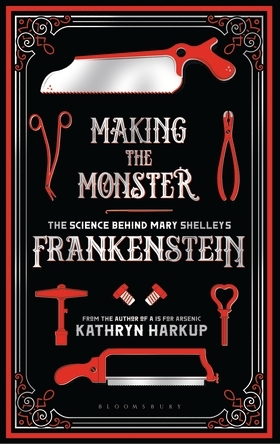
Making the Monster: The Science Behind Mary Shelley's Frankenstein
by: Kathryn Harkup
To be Published: Feb 2018

2018 marks the 200th anniversary of Mary Shelley's gothic masterpiece-- Frankenstein; or The Modern Prometheus. Widely recognized as one of the first (if not the first) work of science fiction, this revolutionary novel has truly withstood the test of time (and continues to haunt middle school literary criticism to this day). Some may already know the broad strokes of how this story came to life: on a dark and stormy night (of course), 18 year old Mary joins her friends in a competitive game to see who can write the best horror story. Inspired by the rational ideals of the Enlightenment and recent advances in electricity research, Mary writes the short story that she will later develop into the novel we know and love.

Making the Monster dives quite bit deeper into the historical context of this work, piecing together not only Mary's biography but those of her family, friends and any intellectual or "natural philosopher" she may have been influenced by. This is interwoven with the upheavals in politics and the sciences leading up to her education and journey away from home. Though the narrative unravels into countless tangents and side-histories, it is well-organized and cohesive. This is a book for anyone who enjoys reading about the history of scientific progress-- the controversies, the blunders, and the experiments that got us where we are today1. Whether or not you enjoyed (or even read) Frankenstein, if you appreciate its significance in history and are ready to fall down the rabbit-hole of alchemy, galvanism, and medical experimentation (oh my!), check it out.

// I received this book free from NetGalley in exchange for an honest review.
*blows dust off drawing pad* 2018 resolutions here we go!
1. If weird medical history is your thing and you're not already listening to the Maximum Fun podcast "Sawbones" Run, don't walk.


Monday, August 14, 2017

Get Well Soon

Get Well Soon: History's Worst Plagues and the Heroes Who Fought Them
by Jennifer Wright
Published: February 2017

Each section dissects a disease that ravaged a populous and how society fought back, admirably or otherwise. My favorites were the Antonine Plague of the Roman Empire, the Black Death of the Middle Ages, Smallpox's impact on Native (North and South) Americans, and the great American cover-up of the Spanish Flu. The only chapter that felt a bit out of place focused on lobotomies, but it was still interesting.

4.5 out of 5 stars: I personally enjoyed the running tongue-in-cheek commentary that accompanied historical context and topical musings but if you're looking for a no-nonsense textbook of facts, this may not be for you. Each chapter has a built in moral lesson, but if you're an anti-vaxxer or are especially sensitive to criticism of Reagan's sense of humor you may not appreciate the sermons.

Thursday, August 10, 2017

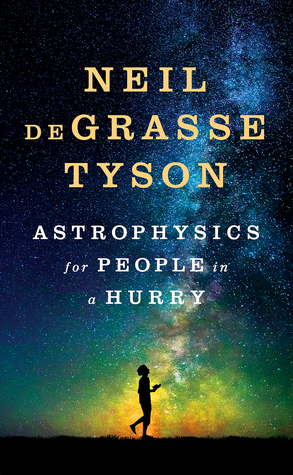
Astrophysics for People in a Hurry

Astrophysics for People in a Hurry
by Neil deGrasse Tyson
Published: May 2017

 A very compact, yet quite thorough sampling of astronomical topics. We bounce from the ingredients of the cosmos to particle physics, from relativity to dark matter and a quick breakdown of the electromagnetic spectrum. Woven into the science lessons, we also get some pushes toward critical thinking and humility:

"Ignorance is the natural state of mind for a research scientist. People who believe they are ignorant of nothing have neither looked for, nor stumbled upon the boundary between what is known and unknown in the universe."

Overall, well written and accessible, a must-read for anyone in need of a quick refresher course on the fabric of the universe.

4 out of 5 stars: As someone who loves to read pop-sci physics books but never made it past PHYS 101 in college (*ahem*), I knew this would be right up my alley. Then again, as someone who loves to read pop-sci physics books, I should have realized that there wasn't going to be lot of new information presented here. But that wasn't deGrasse Tyson's fault! This offers a good, solid base of information for anyone who wants to learn about astrophysics but gets overwhelmed by the trail of links you must follow when researching on Wikipedia.

Bonus: after listening to the audiobook, if you crave more NdGT, he gave the 100th commencement at Rice University which I was actually quite a bit bummed about missing (until I remembered how godawfulhot it is outside during graduation season)

Friday, August 4, 2017

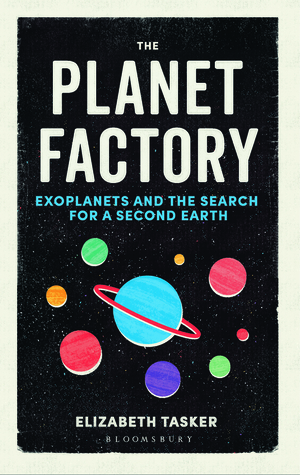
Planet Factory

Planet Factory: Exoplanets and the Search for a Second Earth
by Elizabeth Tasker
To be published: November 2017

In a fantastic primer for budding planetary scientists or armchair explorers, astrophysicist Elizabeth Tasker shares her passion and expertise for the astronomical sciences. Planet Factory chips away at the mountains of exoplanet research and presents it in approachable chunks of historical context, current research and exciting conjecture. Tasker describes how celestial bodies emerge from swirling space dust, details prevailing theories for the varying compositions of known planets and explores the incomprehensibly strange worlds that exist in distant systems (hot Jupiters, super Earths and rogue planets, oh my!).

4 out of 5 stars: There were some stretches of text in the middle that felt a bit tedious and recursive, going through the litany of possible explanations for any findings that didn't fit neatly into the currently accepted theories. But hey, that's science! The repetitive circular critique of hypotheses is both a strength and weakness in the text: it was honestly very refreshing to have each theory delineated with a little dollop of doubt, teaching the reader to question and critically assess previous explanations when presented with new evidence. It's even addressed point-blank in the introduction: any scientist trying to report this amount of interstellar research as fact with the pretense that 'we've got it all figured out' is doing a disservice to the reader and to the field. Overall, this is a very friendly introduction to the awe-inspiring mysteries of our universal neighbors.

Sidenote: I was a little surprised to see no mention of the TRAPPIST-1 system until I realized that announcement was just made February of this year, so of course the author didn't have time to cram in a whole new chapter of reactions to these 7 little buddies and their ultra-cool dwarf. That said, this book leaves me feeling well-equipped to tackle the news of exoplanet discoveries on my own.

// I received this book free from NetGalley in exchange for an honest review


Friday, July 21, 2017

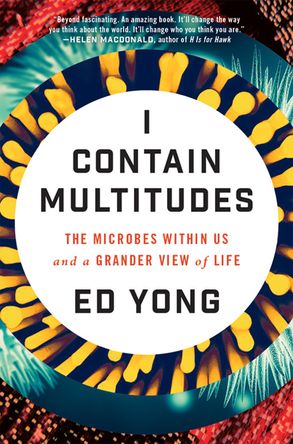
I Contain Multitudes

I Contain Multitudes: The Microbes Within Us and a Grander View of Life
by Ed Kong
Published: Aug 2016

The title is a clever reference to Walt Whitman's 'Song of Myself' but literally refers to the massive communities of microbes that inhabit our bodies. According to the NIH, some estimates show microorganisms outnumbering human cells by 10 to 1 (though they only make up 1-3% of our mass because they're so teensy!). Depending on where you look - skin, mouth, genitals - there are different types of bacteria performing various roles, contributing to our natural biochemical processes. While this book describes the relationships humans have with bacteria, we really have nothing on some plants and animals studied, where the symbiosis has reached a level of critical co-dependence. So we get a good review of the history of microbiology as well as more current research in the field as it explodes in popularity. I for one, welcome our bacterial overlords.

5 out of 5 stars: Kong deftly captures the pendulum of scientific attitudes towards bacteria - swinging between the extremes of "germophobia, where all microbes must be vanquished, towards microbomania, where microbes are heralded as the explanation for - and the solution to - all our ills." In the end, they are all necessarily out to harm or support us, we're all just part of the same complicated machinations of life struggling to continue existing.

Monday, July 17, 2017

Industries of the Future

Industries of the Future 
by Alec J. Ross
Published: Feb 2016

 Senior Innovation Adviser to the Obama administration and tech policy guru Alec Ross deconstructs recent trends in tech around the world in an effort to project some semblance of where we're headed in this increasingly digitized, analyzed global market. He explores the frontiers of robotics, genomics, Big Data, cryptocurrencies and cyberattacks-- but not without setting the historical stage for each industry's inception and meteoric growth. I think what I appreciated most was learning how different nations are setting the stage for advances in these fields: either by trying to recreate Silicon Valley, by opening up the workforce (to young adults and women), or by leap-frogging past generations of innovations (ie: African countries getting cell phones before landlines)

4.5 out of 5 stars: Informative and educational, but somehow in the span of a year, some parts of the book have already become outdated (UBER's outta control like whoa).

Wednesday, July 12, 2017

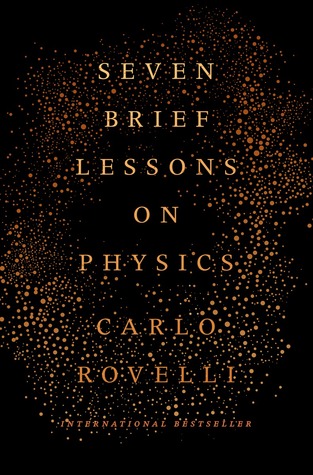
Seven Brief Lessons on Physics

Seven Brief Lessons on Physics
by Carlo Rovelli, (translated by Simon Carnell and Erica Segre)
Published: March 2016


Tiny, poetic morsels of physics exposition originally written as columns for an Italian newspaper. With passion and precision, Rovelli plunges into the past, present and future of physics: the nature of spacetime, the architecture of the cosmos and theories that attempt to characterize how we perceive and interact with reality.

5 out of 5 stars: A clear successor to Sagan and Hawking and likely a bestseller for years to come (which I am happy to ensure single-handedly as everyone I know is getting a copy this Christmas sorry not sorry).

Tuesday, July 11, 2017

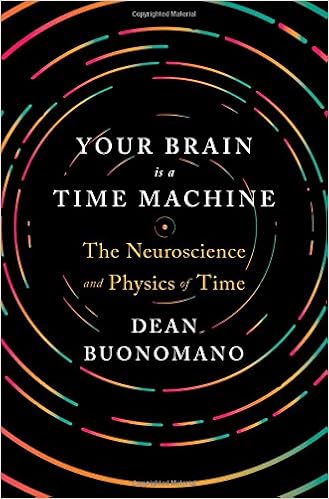
Your Brain is a Time Machine


Your Brain is a Time Machine: The Neuroscience and Physics of Time
by Dean Buonomano
Published: May 2017

Great overview of how the fields of physics and neuroscience approach the study of time: how they overlap and where they butt heads. Historical context, thought experiments, and countless research studies form the framework for how our concept of time has evolved across fields of study. Circadian and biological rhythms inform our mental alarm clocks, but we also employ various levels of more precise neuro-timers to properly parse speech, music and memories. Sundials, crystal quartz watches and atomic clocks capture the external, more objective passage of time, though Einstein's theories of relativity counter any hope of leaning on time as an unqualified absolute.
One dichotomy I found super interesting is the battle of presentism vs eternalism. The former holds that the present, the NOW, is the only moment grounded in reality, while the past and future are inaccessible and only exist in our memories or mental projections, respectively. This is the theory supported by our conscious experience - we feel that each passing moment, each NOW, is somehow qualitatively different than any moment in time not currently being experienced. Eternalism on the other hand, posits that time is the fourth dimension and reality can be presented as a 4D variation of a cube --like a block of cheese where the present moment is merely a slice. This is the view supported by modern physics, because time is relative to the observer and there is no evidence to suggest (beyond our intuition) that the present moment is any more real than any other moment in time. The world of scifi rejoices.

4 out of 5 stars: Expansive and well-researched, I appreciated the author bringing us into the proverbial trenches of each explicitly detailed experiment. That said, though the chapters themselves had a purpose and flow, there were times that felt a bit meandering and unnecessary for the Bigger Picture being painted.

Sunday, July 9, 2017

Pandora's Lab

Pandora's Lab: Seven Stories of Science Gone Wrong 
by Paul A. Offit
Published: April 2017

Scientific progress is a double-edged sword; behind the advancement of knowledge is shadow of unforeseen consequence. This book aims to break down seven of the worst, most destructive fallouts of the 20th century. Extremely well-researched, each chapter presents the technical and historical contexts of the 'discoveries' as well as their repercussions to modern day. That said, this is far from anti-science, rather, an honest look at what happens when healthcare, nationalism, activism and even environmentalism go unchecked by data.

5 out of 5 stars: Listened to this in the car on a drive up and down from Dallas, A++ roadtrip material -- it sparks some really fun, albeit heated, discussions.

Wednesday, July 5, 2017

Stiff

Stiff: The Curious Lives of Human Cadavers 
by Mary Roach

Death is as much a part of being human as life, but what happens to our bodies after we die is an oft avoided subject. So in case you ever wanted to know the various stages of body decomposition, the history of rogue anatomists turned gravediggers, the many avenues of research that require human limbs and tissues, as well as the future of body disposal (we're way past embalming and cremation guys, it's time for liquid dissolution and ecological dispersal!), this is the book for you.

4 out of 5 stars: Some tangents went on a bit too long, and some bits left me wanting to know more - but all in all, solid patchwork of topics that don't get a lot of airtime.

Thursday, June 22, 2017

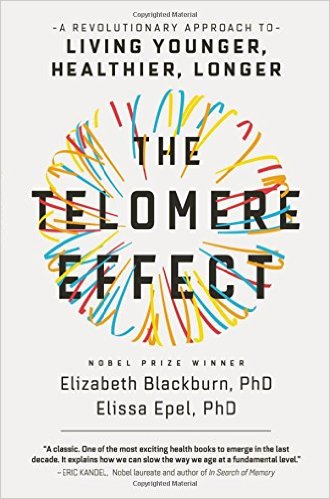
The Telomere Effect

The Telomere Effect: The New Science of Living Younger 
by Elizabeth Blackburn, Elissa Epel
Published: Jan 2017

 Telomeres are repeating nucleotide sequences hanging out on the tips of our chromosomes - they protect the chromosomes and deteriorate with each cell division (isn't aging a bitch?). But turns out the length of telomeres are also affected by a myriad of environmental factors: chronic stress, metabolism, sleep etc. Really was not expecting this to be a self-help style book but honestly, it was very refreshing to see all of the "tips" backed up by clinical research (and any advice was promptly followed up with varying degrees of assurance, depending on the evidence available). Plus it's pretty cool to read about telomere research from someone who literally won a Nobel Prize for her work in discovering them.

4 out of 5: In essence this is a data-heavy look into factors we may or may not be able to manage and how they affect the rate our cells age, but it's not like the advice itself is new. Drink water, eat raw foods, sleep a decent amount, don't be chronically stressed. Still, cliche or not, I enjoyed the delivery and the foundation of experiments.

Thursday, June 15, 2017

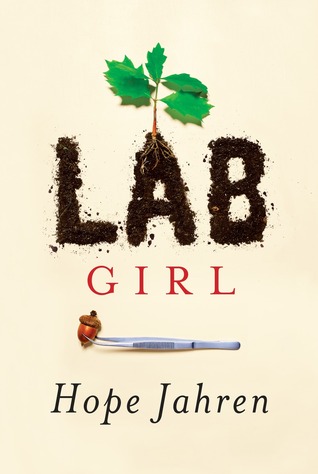
Lab Girl

Lab Girl 
by Hope Jahren
Published: April 2016

Geobiologist Hope Jahren delivers a raw, unflinching memoir that explores her passion for science from eager child to award-winning researcher. Each life lesson is accompanied by an associated blurb on plant biology and growth so whether she's working in a hospital basement mixing drugs, digging through soil to learn about ancient climate change, or explaining how to use a mass spectrometer - her clever, self-deprecating anecdotes are as educating as they are moving. She is open about the harsh realities of being a woman in STEM academia but really bares her soul when it comes to the intersectional struggles of mental health treatment and pregnancy.

5 out of 5 stars: Powerful shit, man.

Friday, April 21, 2017

Soonish

Soonish: Ten Emerging Technologies That'll Improve and/or Ruin Everything 
by Kelly Weinersmith, Zach Weinersmith
To be published: October 2017

Power couple SMBC cartoonist & Rice University professor pick apart ten burgeoning fields of research: from space elevators, nanorobot swarms, 3D organ printing to brain-computer interfaces... and beyond! It’s no small feat predicting how upcoming technological advancements will play out -- both accidental discoveries and the complex dynamics of interacting fields of research can really throw a wrench in timelines (we were promised self-tying shoes and hoverboards damnit!), but the Wienersmiths do a fantastic job of presenting what’s out there, where it’s likely headed, and what we can expect to see ...Soonish.

5 out of 5 stars: No, I'm not just excited about this because I'm a hard fan girl of Saturday Morning Breakfast Cereal and anything associated with my alma mater. But also yes.

In other news, snag a copy of of Soonish from the Goodreads Giveaway! (Ends 8/18/17) I was very lucky to have received an advance reader copy from a friend so I have to do my part to spread the love. Now I just have to lure Kelly and Zach into a book signing at my favorite Rice U pub...


Thursday, March 23, 2017

The Mind's Eye

The Mind's Eye 
by Oliver Sacks
Published Nov 2010

Each chapter details a unique neurological phenomenon of visual perception - delving into research, case studies, and historical accounts. We learn of a musician, slowly losing the ability to read words or music, aphasic patients with only the ability to mime and gesture, the phenomenon of alexia sine agraphia (losing the ability to read but not the ability to write a language), those who lose the ability to recognize faces or those who are born without the stereoptic ability to perceive depth. The last half of the book becomes surprisingly personal as Sacks shares his own experience with ocular melanoma.

4.5 out of 5 stars: As someone who's masters thesis investigated visual perception (*cough*), this book was straight up my alley. Oliver Sacks never fails to capture the beauty of neuroscience, and this was no exception.

Thursday, March 16, 2017

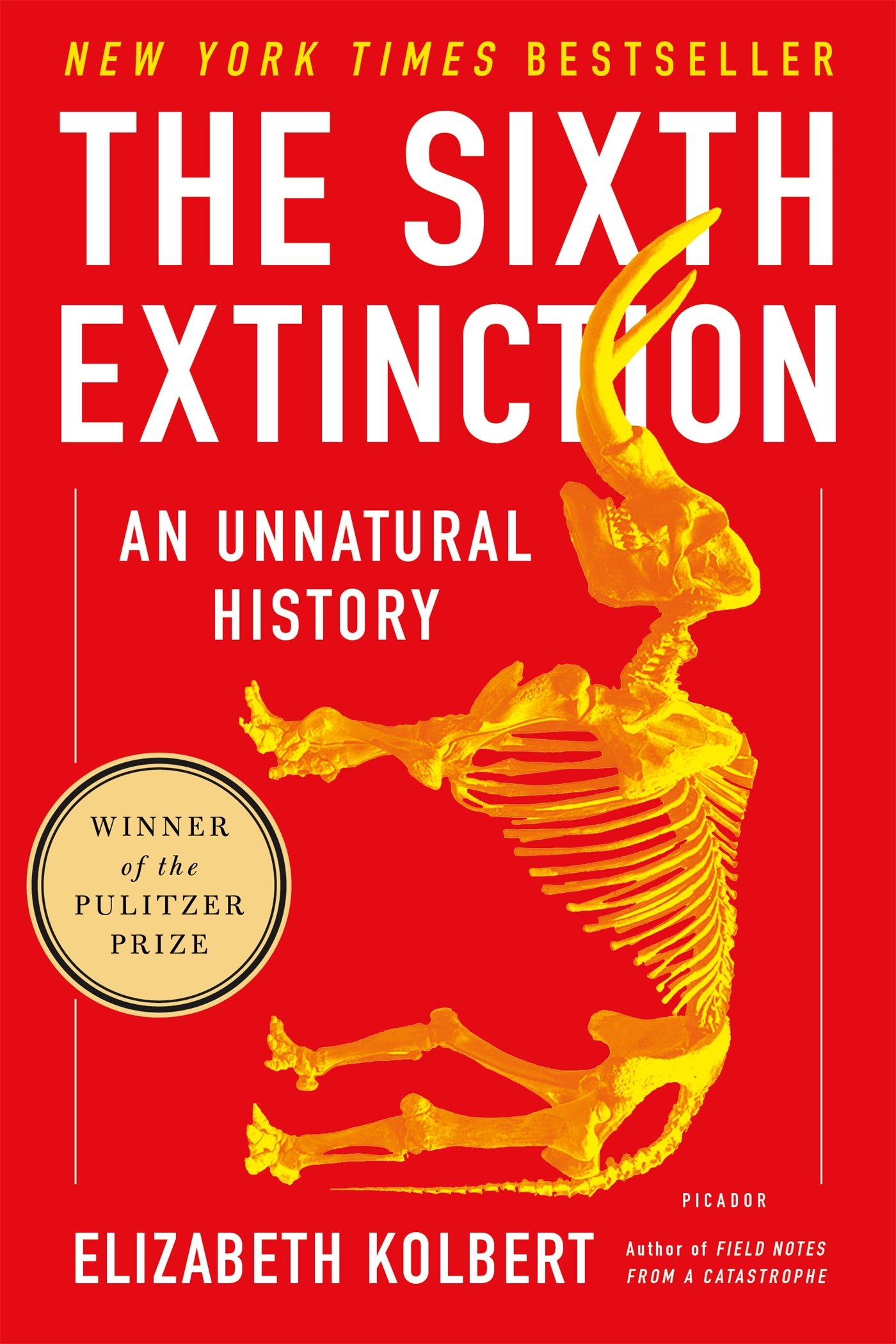
The Sixth Extinction

The Sixth Extinction: An Unnatural History
by Elizabeth Kolbert
Published: Jan 2015

 Well researched investigation of the extinction (or near extinction) of species around the globe and how the pieces form evidence of an mass event. Mankind's impact on the earth goes deeper than our CO2 contributions-- the intentional/ unintentional sharing of species across the globe and the isolation of environments with roads and cities have created a simultaneously hyper connected and fragmented New Pangaea. Kolbert travels to Italy, Australia, Brazil to seek out the effects of warming, ocean acidification and invasive speciation. Kolbert manages to cram in a historical account of how scientists came to understand evolution, extinction, and fossilization as well- never a dull chapter.

4.5 out of 5 stars

Friday, February 24, 2017

Dark Matter and the Dinosaurs

Dark Matter and the Dinosaurs: The Astounding Interconnectedness of the Universe
by Lisa Randall
Published: October 2015

 Lisa Randall (professor of particle physics and cosmology at Harvard) provides a comprehensive examination of how the Earth interacts with its cosmic environment. The first ~80% of the book presents both theoretical and data-driven explorations how particle physics, geology, and cosmology all contribute to our understanding of the history of the universe. But, as evidenced in the title, this all sets the stage for Randall's own research in dark matter -- specifically its potential role in influencing long-range comet trajectories.

4 out of 5 stars: A bit dense, but definitely still approachable thanks to Randall's light-hearted asides and palpable sense of awe and wonder.

Thursday, February 9, 2017

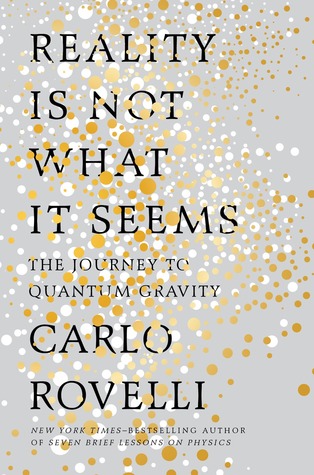
Reality is not what it seems

Reality Is Not What It Seems: The Journey to Quantum Gravity 
by Carlo Rovelli, translated by Simon Carnell and Erica Segre
Published: January 2017

So much has happened in the world of physics since I was in school! Rovelli presents an easily accessible summary of the current state of theoretical physics. From Ancient Greek philosophers through the remarkable advances of the 20th century up through more recent theories of Quantum loops and thermal time.

5 out of 5 stars: If you're at all interested in immersing yourself in how much (and how little) we actually know about the universe, I sincerely can't recommend this enough.

Wednesday, February 1, 2017

Elon Musk: Inventing the Future

Elon Musk: Inventing the Future 
by Ashlee Vance
Published: March 2015

This biography is an easily digestible page-turner covering everything from Musk's family history to present day* in excruciating detail: a wide ride of childhood torment, risky start ups, celestial highs and inches-away-from-bankruptcy lows. Elon Musk is truly larger than life and his optimism is infectious. Yet somehow the enormity of his accomplishments --manufacturing electric cars, building rockets from scratch, or funding accessible solar energy -- are still just steps along his true calling of paving the way for humans to colonize Mars.
*epilogue was updated Jan2017

5 out of 5 stars: I for one, welcome our new SpaceX/Tesla/SolarCity overlords.

Thursday, January 26, 2017

The Hidden Life of Trees

The Hidden Life of Trees: What They Feel, How They Communicate
by Peter Wohlleben, Translated by Jane Billinghurst

Very informative read that shows but a sampling of what humans understand about tree biology. More than just a backdrop to animal activities, trees communicate, form social connections, have memories, exhibit violence and adaptability. The book is organized into pockets of knowledge, with each bite-sized chapter exploring one topic or species.

3.5 out of 5 stars: Wohlleben's friendly, easy-going voice makes it feel more like a child's book of short stories than a textbook: caveat emptor.

Sunday, February 27, 2011

Exploring the Default Mode Network

Hans Berger, inventor of the electroencephalogram was one of the first people to theorize that the brain remains perpetually active, even across a wide variety of mental states. Whether we are awake, sleeping, focused or daydreaming our brain is always hard at work. Obviously there are key differences between these states both physically and subjectively. But how do these differences translate into brain activity? Recent fMRI investigations have shown consistent patterns of activations in people's brains when they are awake (but resting) and this has been deemed the "Default Mode" or "Resting State" network. This animation explores some relevant theories theories its activations and potential applications of the research.


The whole project took about 4 months to complete. Of course, I blame my snail's pace on whichever task-positive networks failed to inhibit default mode connectivity (teehee really bad neuro humor). That and the fact that this was my first full length frame-by-frame animation! But seriously, that's why the audio is so terrible. If anyone knows how to export a Flash CS4 file and retain decent audio quality I'm all ears (my Google-fu has failed me).